Best of
Best Smart Bird Feeders With Cameras (2026)
The best smart bird feeders with cameras, compared on specs, cold ratings and 2-year cost including subscriptions. Researched picks, updated Oct 2026.
Updated
By Feeder Field Editorial Team · Published
Disclosure: We may earn a commission when you buy through links on this page. Read our affiliate disclosure.
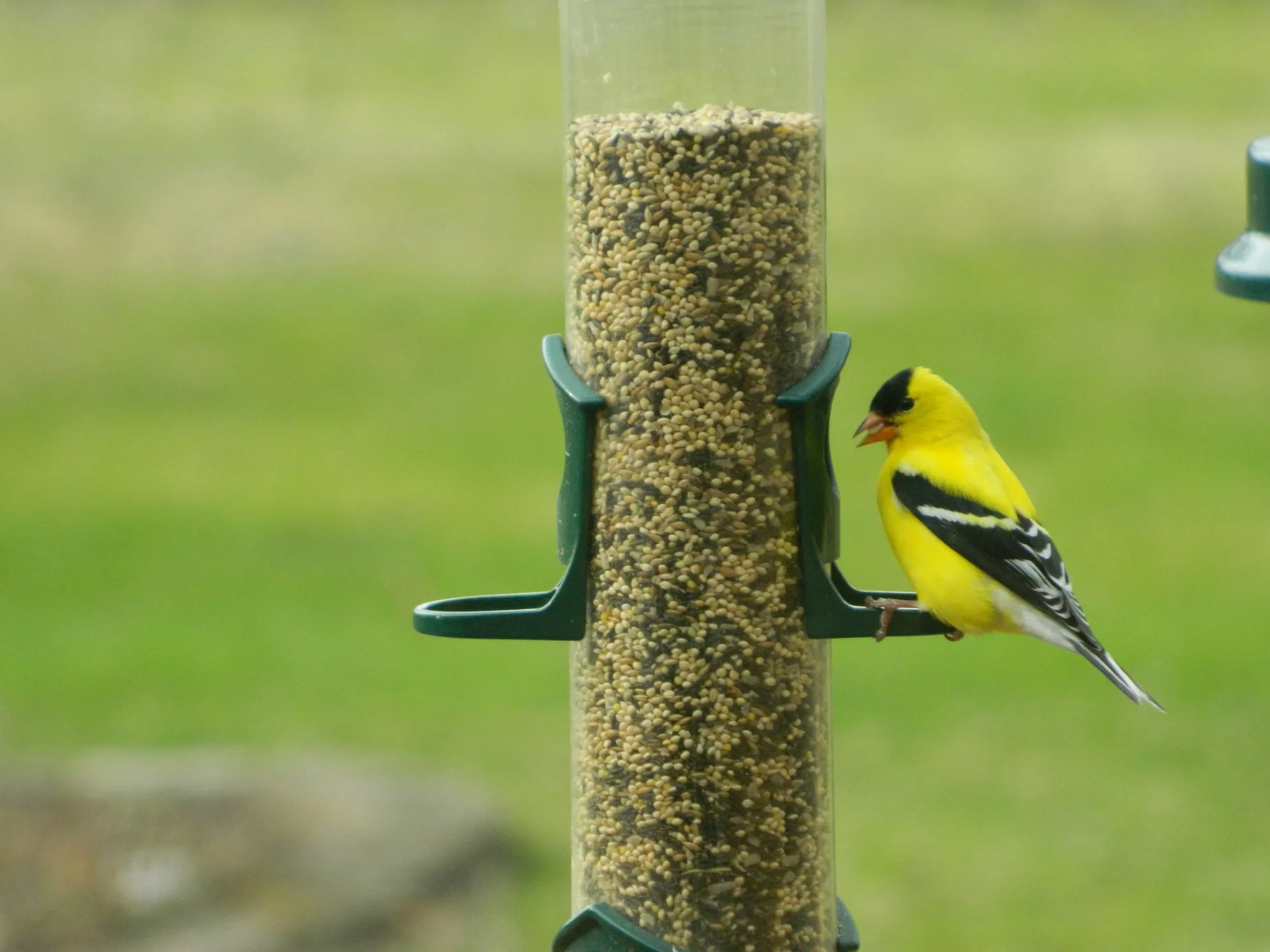
The best smart bird feeder with camera for most backyards is the Birdfy Feeder 2 Pro (opens in a new tab). It pairs a 2K lens with a 1080p wide lens, holds 42.3 oz of seed and ships with a solar panel for about $240.
If your winters regularly drop below 14°F, get the Birdbuddy Pro Solar (opens in a new tab) instead: Bird Buddy rates it down to -5°F. Bird Buddy has dropped it from its own shop, so buy it from a retailer that still has it (Target, $239.99 on October 27, 2026). If you never want to pay a monthly fee, the Humbirdy 4K AI Bird Feeder (opens in a new tab) includes AI species ID with no plan.
Comparison table
| Product | Price (Oct 2026) | Video | AI ID without paying? | Paid plan (optional) | Power | Seed capacity | Cold rating (maker) | Link |
|---|---|---|---|---|---|---|---|---|
| Birdfy Feeder 2 ProBest overall | ~$240 | 2K + 1080p | Unclear: 7-day trial or 10/day (Birdfy pages differ) | Plus $79.99/yr | 9,000 mAh + 3 W solar (incl.) | 42.3 oz (2.5 L) | 14°F | See at Birdfy (opens in a new tab) |
| Birdbuddy Pro SolarBest for cold climates | ~$240 at Target (no longer on Bird Buddy's shop) | 2K, 5 MP photos | Manual ID; automatic ID is paid | Auto ID: Family Premium $98.99/yr | 3,800 mAh + solar roof (incl.) | 3.8 cups (0.9 L) | -5°F | See at Target (opens in a new tab) |
| Humbirdy 4K AI Bird FeederBest no-subscription | ~$230–$260 | 4K/30 fps | Yes, no fees | None required | 5,200 mAh + 3 W solar (incl.) | 6 cups (maker also says 1.8 L) | 14°F | See at Humbirdy (opens in a new tab) |
| Birdfy Feeder 2 DuoBest video coverage | ~$360 | 2K + 1080p front, 1080p side | Unclear: 7-day trial or 10/day (Birdfy pages differ) | Plus $79.99/yr | 9,000 mAh ×2 + 5 W solar (incl.) | 42.3 oz (2.5 L) | 14°F | See at Birdfy (opens in a new tab) |
| Birdbuddy Hummingbird Feeder ProBest for hummingbirds | ~$249 ($289 solar) | 2K, 5 MP photos | Manual ID | Auto ID: Family Premium $98.99/yr | 3,800 mAh (solar roof optional) | 14 fl oz nectar | -5°F | See at Bird Buddy (opens in a new tab) |
| Birdfy Feeder 2Best budget | ~$190 | 1080p | 7-day trial, then subscription (product page) | Plus $79.99/yr | 9,000 mAh (solar optional) | 42.3 oz (2.5 L) | 14°F | See at Birdfy (opens in a new tab) |
Every Birdfy Feeder 2 model is 2.4 GHz only and stores clips in the cloud (no microSD replay). Sources are linked in each product section.
How we chose
We have not tested these feeders, so this list is researched. Our process:
- We started with the brands that dominate US search results and retail: Bird Buddy, Birdfy (made by Netvue), Humbirdy, Kiwibit, Heapets and Wingscapes.
- We kept only models you can order new in the US from the brand’s US store or a major US retailer in October 2026, and left out preorder-only models.
- We took specs from manufacturer pages and support docs, not Amazon listings. Where a spec isn’t published, we say so instead of guessing.
- We priced the subscriptions from each brand’s own store or app-store listing and worked out a 2-year cost of ownership.
- We read independent reviews for recurring issues such as squirrel damage, and we name the source when we report one.
What we did not do: measure ID accuracy, count battery days or check Wi-Fi range. When we test these feeders, we’ll publish the method on our testing page and relabel this page.
The best smart bird feeders
1. Birdfy Feeder 2 Pro: best overall
Price as of Oct 27, 2026~$240
Check price at Birdfy (opens in a new tab)Who it’s for: Most backyards where winters stay above about 14°F, and buyers who want strong camera specs and solar in the box without a subscription for basic use.
Key specs (manufacturer):
- Cameras: upper lens 2K, lower wide lens 1080p
- Battery: 9,000 mAh lithium-ion, 3 W solar panel included
- Seed capacity: 42.3 oz (2.5 L)
- Wi-Fi: 2.4 GHz only; no microSD replay
- Weather: IP66; operating range 14°F to 113°F
- Price: $239.99 on Birdfy’s US store as of October 27, 2026 (list $319.99)
Specs are from Birdfy’s Feeder 2 series spec sheet; the price is from Birdfy’s US store.
The upper lens is built for close portrait shots and the wide lens frames the whole perch. The hopper holds roughly twice what Bird Buddy’s does, so you refill less often.
The catch is cold. Birdfy lists 14°F as the bottom of the operating range for the whole Feeder 2 series. That suggests it isn’t designed for long sub-zero stretches in the northern Plains or upper Midwest.
Birdfy’s AI ID terms are unclear right now (checked October 8, 2026). Birdfy’s membership pages list a Free level with 30 days of cloud storage for clips up to 20 seconds, 5 GB of “Collection” storage and 10 AI bird recognitions per day (Birdfy membership help).
But the Feeder 2 product page says AI ID is a “7-day trial, then by subscription” (Birdfy), and Birdfy’s cloud-service help says products sold with “AI by subscription” need a subscription for bird recognition, while products with lifetime AI include it (Birdfy cloud service help).
The Feeder 2 Pro page doesn’t state the terms either way. What you get may depend on the model, on whether the unit was sold as “AI by Subscription” or “AI Lifetime Free,” and on when you set up your account.
Budget as if automatic ID needs a paid plan after the trial, and treat any free daily IDs as a bonus.
Pros
- Two cameras at a mid-range price
- Solar panel in the box
- Large 42.3 oz hopper
- IP66 weather rating
Cons
- Rated only down to 14°F
- 2.4 GHz Wi-Fi only, no local SD replay
- AI ID may need a paid plan after a 7-day trial (Birdfy pages disagree)
Who it’s NOT for: Anyone with frequent single-digit or sub-zero winter days, or people who want every visit identified without paying.
Check price on Birdfy Feeder 2 Pro (opens in a new tab)2. Birdbuddy Pro Solar: best for cold climates
Price as of Oct 27, 2026~$240 at Target
Check price at Target (opens in a new tab)Read this first (October 27, 2026): Bird Buddy no longer lists the Pro Solar on its own US shop, and its old product page now opens the shop list. Target still sold it new for $239.99 (regular $279.99) and showed it in stock that day (Target). Treat it as a model on its way out: buy it while a major retailer has it, and check the warranty on the listing you buy from. Target’s listing states a 1-year limited warranty.
Who it’s for: Northern backyards, families who want to share the feed, and anyone who cares more about the cold rating than hopper size.
Key specs (manufacturer):
- Camera: 2K video with HDR and slow motion, 5 MP photos, 122° field of view
- Battery: 3,800 mAh, rated up to one month per charge; solar roof included
- Seed capacity: 3.8 cups (0.9 L)
- Wi-Fi: 2.4 GHz, plus Bluetooth for setup
- Weather: IP67; operating range -5°F to 120°F
- Price: $239.99 at Target (regular $279.99), October 27, 2026
Specs are from Bird Buddy’s product page as we read it on October 7, 2026, before Bird Buddy removed it. Target’s listing confirms the 2K video and 5 MP photos.
Bird Buddy’s cold rating is 19 degrees lower than Birdfy’s, which is the biggest spec difference between the two brands for northern buyers.
Bird Buddy’s current product pages list photos, videos and livestream with manual bird identification for the feeder alone. Automatic identification of every visitor is a Premium feature. The only plan those pages list is Family Premium: one month free, then $98.99 a year (Bird Buddy).
The App Store’s in-app purchase list still shows an “Individual annual” option at $69.99, but the listing doesn’t say what it includes, and Bird Buddy’s own pages no longer mention it, so we price automatic ID at the Family rate (App Store).
The App Store also sells a cheaper Bird ID Pass ($3.99/month or $39.99/year). Bird Buddy describes it as identifying birds from photos and sounds you capture with your phone. It is not the plan that turns on automatic ID at the feeder.
The trade-off is the hopper. At 3.8 cups it holds well under half of Birdfy’s 42.3 oz bin, so expect frequent refills when winter flocks are busy.
Pros
- Rated to -5°F, the coldest rating on this list
- 2K video and 5 MP photos with HDR
- Wide 122° view; IP67
- Solar roof included
Cons
- Small 3.8-cup hopper
- Automatic ID of every visitor requires a paid plan
- No longer sold on Bird Buddy’s own shop; stock may run out
Who it’s NOT for: People who want to refill once a week, anyone who won’t pay for automatic ID, and buyers who would rather get one of Bird Buddy’s newer models (below).
Check price on Birdbuddy Pro Solar (opens in a new tab)New from Bird Buddy (not ranked yet): Bird Buddy’s US shop lists three new seed feeders: the Birdbuddy Nook ($99; $159 for Nook Solar) and the Birdbuddy Home ($219). Per Bird Buddy, both have a 135° field of view, a 3,900 mAh battery, IP67 and a -5°F to 120°F range. The Nook holds 3.8 cups on 2.4 GHz Wi-Fi. The Home holds 6 cups, has solar panels built into the roof and supports 2.4 and 5 GHz Wi-Fi. Automatic ID again needs Family Premium ($98.99 a year). On October 27 the shop marked them “Starts delivering in November”; by October 30 that label was gone, and the Nook and Home pages said in-stock items are dispatched within 24 hours of an order. We’ll consider them for this list once independent reviews exist.
3. Humbirdy 4K AI Bird Feeder: best no-subscription feeder
Price as of Oct 27, 2026~$230–$260
Check price at Humbirdy (opens in a new tab)Who it’s for: Buyers who want AI species ID and local copies of their clips, with no monthly fee.
Key specs (manufacturer):
- Video: 4K at 30 fps, 1080p at 120 fps for slow motion, 8 MP stills
- Wi-Fi: 2.4 GHz and 5 GHz (Wi-Fi 6)
- Storage: local, with optional cloud backup
- Battery: 5,200 mAh; 3 W solar panel in the box
- Seed capacity: 6 cups (Humbirdy also gives 1.8 L, which is closer to 7.5 cups, so treat it as about 6 to 7 cups)
- Weather: IP66; operating range 14°F to 113°F
- Price: $229.99 (feeder with solar panel) or $259.99 with a 5-in-1 attachment set on Humbirdy’s US store as of October 27, 2026
Video and storage details are from Humbirdy’s launch announcement. Wi-Fi, battery, seed capacity, weather rating, box contents and price are from Humbirdy’s product page, which lists this model as the SH66 4K Ultra.
Humbirdy says AI recognition is included at no extra cost, covers over 10,000 species, and has “no subscription fees or hidden charges” (Humbirdy). It is the only feeder here with 5 GHz Wi-Fi. That won’t add range, since 5 GHz carries less far through walls than 2.4 GHz, but it gives you a second option on a crowded network.
Humbirdy’s product page now lists the specs it was missing when we first checked. Its cold floor is 14°F, the same as Birdfy’s, so it doesn’t help northern buyers. Its 6-cup hopper sits between Bird Buddy’s 3.8 cups and Birdfy’s 2.5 L.
Pros
- No subscription for AI ID
- 4K video, the highest resolution here
- Local storage, so clips aren't tied to a cloud plan
- Dual-band Wi-Fi
Cons
- Rated only down to 14°F
- Smaller brand with a shorter track record
- 4K files are large and slower to share
Who it’s NOT for: Buyers with frequent winter nights below 14°F.
Check price on Humbirdy 4K AI Bird Feeder (opens in a new tab)4. Birdfy Feeder 2 Duo: best video coverage
Price as of Oct 27, 2026~$360
Check price at Birdfy (opens in a new tab)Who it’s for: People who want two angles of every visit for video and sharing.
Key specs (manufacturer):
- Cameras: front unit with 2K and 1080p lenses, plus a separate 1080p side camera
- Battery: 9,000 mAh; 5 W solar panel included
- Seed capacity: 42.3 oz (2.5 L)
- Wi-Fi: 2.4 GHz; operating range 14°F to 113°F; IP66
- Price: $359.99 on Birdfy’s US store as of October 27, 2026 (list $449.99)
Specs are from Birdfy’s spec sheet; the price is from Birdfy’s US store.
This is the Feeder 2 Pro plus a second camera that films from the side. Bob Vila’s review praised the front-and-side coverage and the color in low light. The same reviewer called it “not squirrel-proof at all” and reported squirrels chewing through the solar panel wire and seed guard. TechRadar has also reviewed it.
About “AI Lifetime Free”: Birdfy has sold some feeders with lifetime AI ID included, and its help center says existing Lifetime AI keeps its original benefits.
The Duo page on Birdfy’s US store did not carry that label or state any AI terms on October 8, 2026. Don’t count on free AI ID (see the Feeder 2 Pro section above) unless the listing you buy from says “AI Lifetime Free” in writing.
Pros
- Two viewpoints of every visit
- Bigger 5 W solar panel than the Pro
- Same large 42.3 oz hopper
Cons
- The most expensive feeder here
- Same 14°F cold floor as the rest of the Feeder 2 line
- Two cameras means more to charge and more parts for squirrels to chew
Who it’s NOT for: Casual watchers who just want an alert and a photo. The Feeder 2 or Feeder 2 Pro covers that for less.
Check price on Birdfy Feeder 2 Duo (opens in a new tab)5. Birdbuddy Hummingbird Feeder Pro: best for hummingbirds
Price as of Oct 27, 2026~$249
Check price at Bird Buddy (opens in a new tab)Who it’s for: Yards with regular hummingbird traffic from spring through fall, and anyone who wants slow-motion wing footage.
Key specs (manufacturer):
- Camera: 2K video, 5 MP photos with HDR, slow motion, 122° field of view, 1/2.7” sensor
- Nectar capacity: 14 fl oz (1.75 cups)
- Battery: 3,800 mAh, up to one month per charge; solar roof optional
- Wi-Fi: 2.4 GHz; operating range -5°F to 120°F
- Price: $249; the solar version is $289, as of October 27, 2026 (up from $209 and $239 on sale in early October; no sale price was shown on October 27)
Specs are from Bird Buddy’s product page; prices are from Bird Buddy’s shop. The product page says “2K Video (up to 2K Ultra with Premium membership),” and the only plan it lists is Family Premium at $98.99 a year, so check what the free tier records before you buy.
This is a seasonal pick. In most of the US, hummingbirds leave by fall, so this feeder earns its keep from spring to early fall. For winter seed eaters, choose one of the picks above.
Pros
- Built for hummingbirds, with slow-motion capture
- Same 122° view and 5 MP photos as the Birdbuddy Pro
- Works without a paid plan
Cons
- Seasonal use in most US regions
- Nectar needs changing and cleaning often in hot weather
- Solar costs extra unless you buy the solar version
Who it’s NOT for: Anyone who mainly wants to watch winter seed eaters.
Check price on Birdbuddy Hummingbird Feeder Pro (opens in a new tab)6. Birdfy Feeder 2: best budget
Price as of Oct 27, 2026~$190
Check price at Birdfy (opens in a new tab)Who it’s for: First-time buyers who want a large hopper at the lowest price on this list.
Key specs (manufacturer):
- Camera: single 1080p
- Battery: 9,000 mAh; solar panel optional
- Seed capacity: 42.3 oz (2.5 L)
- Wi-Fi: 2.4 GHz; operating range 14°F to 113°F; IP66
- Price: $189.99 on Birdfy’s US store as of October 27, 2026 (list $279.99)
Specs are from Birdfy’s spec sheet; the price is from Birdfy’s US store.
This is the Feeder 2 Pro without the 2K lens and without a solar panel in the box. You keep the big hopper and the 9,000 mAh battery.
It is also the one Birdfy product page that spells out the AI terms: “7-day trial, then by subscription” (Birdfy), even though Birdfy’s membership pages list 10 free AI IDs a day. Expect to pay for AI ID after the first week.
Pros
- Lowest price here
- Same hopper and battery as the Pro
- Room to add solar later
Cons
- 1080p only
- No solar panel in the box
- Same 14°F cold floor
- AI ID: 7-day trial, then by subscription
Who it’s NOT for: Anyone who wants sharp close-ups for printing or cropping. Step up to the Pro.
Check price on Birdfy Feeder 2 (opens in a new tab)Subscriptions explained: what’s free and what’s paywalled
Every feeder here streams and records without a plan. What changes is how much the AI does for you and how long clips stay in the cloud.
| Brand | Free tier | Paid options (as of Oct 27, 2026) |
|---|---|---|
| Bird Buddy | Photos, videos and livestream; manual bird identification | Automatic feeder ID: Family Premium, $98.99/yr after a one-month trial (the only plan on Bird Buddy’s product pages). The App Store also lists an “Individual annual” option at $69.99 without saying what it includes. Bird ID Pass ($3.99/mo or $39.99/yr) is phone photo and sound ID only, not automatic feeder ID |
| Birdfy | 30-day cloud clips up to 20 seconds, 5 GB Collection storage. AI ID: membership pages say 10 per day; the Feeder 2 product page says 7-day trial, then by subscription | Plus $79.99/yr for up to 2 devices; Pro $149.99/yr for up to 10 devices (Birdfy US store) |
| Humbirdy | AI recognition included, local storage | Optional cloud backup |
Birdfy plan prices are from its Plus and Pro store pages, and device limits from its membership help page (which quotes a lower $69.99/yr reference price for Plus paid through Stripe; we use the store price).
Because Birdfy’s pages disagree on whether any AI ID is free after the first week, we treat a Plus plan as the realistic cost if you want AI ID on a Birdfy. Birdfy also notes that paying through Apple or Google may cost slightly more because of store commissions (Birdfy cloud service help).
Two-year cost of ownership
Device price plus two years of the plan most people would pick for automatic or unlimited ID. Prices as of October 27, 2026, before tax. For Bird Buddy we use Family Premium, the only automatic-ID plan on Bird Buddy’s own pages.
| Feeder | Device | 2 years, no plan (limited or no AI ID) | 2 years, with the typical paid plan |
|---|---|---|---|
| Birdfy Feeder 2 | ~$190 | ~$190 | ~$350 (Plus, 2 × $79.99) |
| Humbirdy 4K | ~$230–$260 | ~$230–$260 | Same, since no plan is needed |
| Birdfy Feeder 2 Pro | ~$240 | ~$240 | ~$400 (Plus) |
| Birdbuddy Pro Solar (Target) | ~$240 | ~$240 | ~$438 (Family, 2 × $98.99) |
| Birdbuddy Hummingbird Feeder Pro | ~$249 | ~$249 | ~$447 (Family) |
| Birdfy Feeder 2 Duo | ~$360 | ~$360 | ~$520 (Plus) |
Buying one as a gift? Tell the recipient about the plan costs above, and see our guide to gifts for bird lovers for other picks at each budget.
The pattern: If you would pay for unlimited ID anyway, the Humbirdy costs less over two years than any Birdfy plus a Plus plan, and less than either Bird Buddy with Family Premium. If you’re happy to identify birds yourself, you can skip the plans, and the Birdfy Feeder 2 is the cheapest way in. The Birdbuddy Pro Solar no longer undercuts Birdfy: its early-October $189 sale on Bird Buddy’s own shop ended when Bird Buddy stopped listing it.
Just don’t buy a Birdfy expecting free AI ID: its own product page says the AI is a 7-day trial, then by subscription. If you never want to pay for a plan, our guide to bird feeder cameras without a subscription grades what each feeder still does for free.
Which one fits your yard?
- Winter lows often below 14°F? Choose Bird Buddy (rated to -5°F): the Pro Solar while retailers have it, or the newer Nook or Home from Bird Buddy’s own shop (not ranked yet; see above).
- Weak Wi-Fi at the feeder spot? Fix that first (see below). If your 2.4 GHz band is crowded, Humbirdy’s 5 GHz option helps.
- Squirrels on the property? Budget for a baffle and pole whichever feeder you pick. See how to keep squirrels off your bird feeder.
- Hummingbirds are the main event? Birdbuddy Hummingbird Feeder Pro.
- Hate subscriptions? Humbirdy.
- Want to refill less often? Pick a Birdfy for the 42.3 oz hopper.
Buying guide
Camera resolution and field of view
At feeder distance the bird is only inches from the lens, so even 1080p can show a lot of detail. Higher resolution (2K, 4K) mainly helps when you crop or want stills to print.
Field of view decides whether you get the whole bird or just a beak. Bird Buddy publishes 122°. Birdfy’s dual-lens models handle it with a separate wide lens.
AI species ID: how it works and its limits
The camera detects motion, captures frames, and an image model guesses the species. Birdfy says its model covers over 6,000 species worldwide (Birdfy); Humbirdy says over 10,000 (Humbirdy).
What to expect, based on how image classifiers generally behave:
- Distinctive feeder birds in good light (Northern Cardinal, Blue Jay, Black-capped Chickadee) are the easiest IDs.
- Female and juvenile plumages, look-alike pairs (Downy vs Hairy Woodpecker, House vs Purple Finch) and backlit or blurry frames are the hardest.
- None of these brands publishes an independently audited accuracy rate, and we haven’t measured one.
If an ID surprises you, check it with the free Merlin app or an eBird range map before you log it.
Power: battery vs solar
Bird Buddy uses a 3,800 mAh battery rated up to one month per charge. Birdfy’s Feeder 2 series uses 9,000 mAh, with a 3 W panel included on the Pro and 5 W on the Duo.
Panels need direct sun to keep up. December and January bring short days, low sun and snow on the panel, and lithium batteries hold less charge in the cold. Plan on a USB-C top-up now and then in winter, and point the panel south with as little shade as possible.
Wi-Fi range and placement
Every feeder here needs a 2.4 GHz signal at the feeder (Humbirdy can also use 5 GHz). Before you buy, stand where the feeder will go and check your phone’s Wi-Fi signal.
If it’s weak, a mesh node or outdoor-rated extender near a window facing the yard usually fixes it. Exterior walls, metal siding and low-E windows all cut the signal.
Squirrels and smart feeders
None of these is squirrel-proof. Bob Vila’s reviewer reported squirrels chewing the Birdfy Duo’s solar wire and seed guard.
Mount the feeder on a baffled pole at least 10 feet from trees, fences and roofs; Project FeederWatch says squirrels can jump to feeders placed closer than that (FeederWatch).
Our guide to squirrel-proof bird feeders covers mechanical feeders if you want a second, squirrel-resistant station.
Setup tips
- Placement: Close to cover but at least 10 feet from anything a squirrel can jump from (FeederWatch), and within Wi-Fi range. Our bird feeder placement guide covers window distance and sun on the panel too.
- Sun angle: Don’t aim the camera into the low winter sun. Backlit birds are harder to identify.
- Seed: Black-oil sunflower is easy for nearly all seed-eating birds to crack, according to All About Birds. More species means more varied clips.
- Cleaning: Remove the camera module and clean the feeder regularly. A study reported by Project FeederWatch found that a 10-minute soak in 1 part bleach to 9 parts water removed more Salmonella than soap and water alone. Keep the camera out of the bleach.
Related
- Bird Buddy vs Birdfy comparison
- Best bird feeder cameras without a subscription
- Gifts for bird lovers, by budget
- All smart feeder guides
Sources
- Birdfy: Feeder 2 series specifications, membership help, cloud service help, US store pages for the Feeder 2, Feeder 2 Pro, Feeder 2 Duo, Membership Plus and Membership Pro
- Bird Buddy: Hummingbird Feeder Pro product page, Nook product page, Home product page, shop, App Store listing. Pro Solar specs are from Bird Buddy’s former product page (read October 7, 2026, since removed); current price and stock from Target
- Humbirdy: official site, SH66 4K Ultra product page, 4K Ultra launch announcement (GlobeNewswire)
- Independent reviews: Bob Vila, Birdfy Feeder 2 Duo, TechRadar, Birdfy Feeder 2 Duo
- Cornell Lab: Project FeederWatch, other feeder visitors, Project FeederWatch, cleaning feeders, All About Birds, types of bird seed
Frequently asked questions
- Do smart bird feeders need a subscription?
- Not to stream and record: every feeder here does that without a paid plan. AI species ID is different. Bird Buddy's free tier offers manual ID only. Birdfy's own pages disagree: its membership pages list 10 free AI IDs a day, but the Feeder 2 product page says AI ID is a 7-day trial, then by subscription. Humbirdy says its AI ID has no subscription fees at all.
- Do smart feeders work without Wi-Fi?
- Not in any useful way. All six need a Wi-Fi signal at the feeder for alerts, clips and live view. Most are 2.4 GHz only; Humbirdy also supports 5 GHz. If the signal is weak where the feeder will hang, plan for a mesh node or extender.
- How accurate is AI bird identification?
- No brand publishes an independently audited accuracy rate, and we have not run our own accuracy test. Image classifiers do best on clear side views of common species and worst on females, juveniles, look-alike species and blurry or backlit frames. Cross-check surprising IDs with Merlin or eBird.
- Do squirrels destroy smart bird feeders?
- They can. None of these feeders is squirrel-proof. Bob Vila's reviewer reported squirrels chewing through the Birdfy Duo's solar panel wire and seed guard. Mount any smart feeder on a baffled pole at least 10 feet from jump-off points.
- How long does the battery last, and is solar enough in winter?
- Bird Buddy rates its feeders at up to one month per charge. Birdfy's Feeder 2 series uses a 9,000 mAh battery, with a 3 W panel included on the Pro and 5 W on the Duo. Short, cloudy winter days and shade cut what any panel can put back, so expect to charge by USB-C now and then in winter.
- Bird Buddy or Birdfy: which is better?
- It depends on climate and refills. Bird Buddy is rated down to -5°F; Birdfy's Feeder 2 series is rated to 14°F. Birdfy has a much bigger seed hopper (42.3 oz vs 3.8 cups) and more camera options. Note that Bird Buddy no longer lists the Birdbuddy Pro Solar on its own US shop (checked October 27, 2026); Target still sold it at $239.99. Bird Buddy's newer Nook and Home feeders are on its shop; on October 30, 2026 their pages said in-stock items are dispatched within 24 hours of an order.
Keep reading

Written by
Research and editing
The Feeder Field editorial team researches backyard birding gear and bird feeding for US readers. We compare manufacturer specifications, subscription terms and long-term owner feedback, and we check feeding and bird-behavior advice against the Cornell Lab of Ornithology, Audubon and university extension services. Articles are drafted with the help of AI tools, then fact-checked and edited by our team before they go live. Every guide says whether it is researched or hands-on tested, and we update buying guides at least every six months.