Guide
How to Attract Cardinals: Food, Feeders, Plants and Timing
How to attract cardinals: offer black-oil sunflower in a hopper or platform feeder near dense shrubs, add water, and plant native berry shrubs. Sourced from Audubon.
Updated
Disclosure: We may earn a commission when you buy through links on this page. Read our affiliate disclosure.
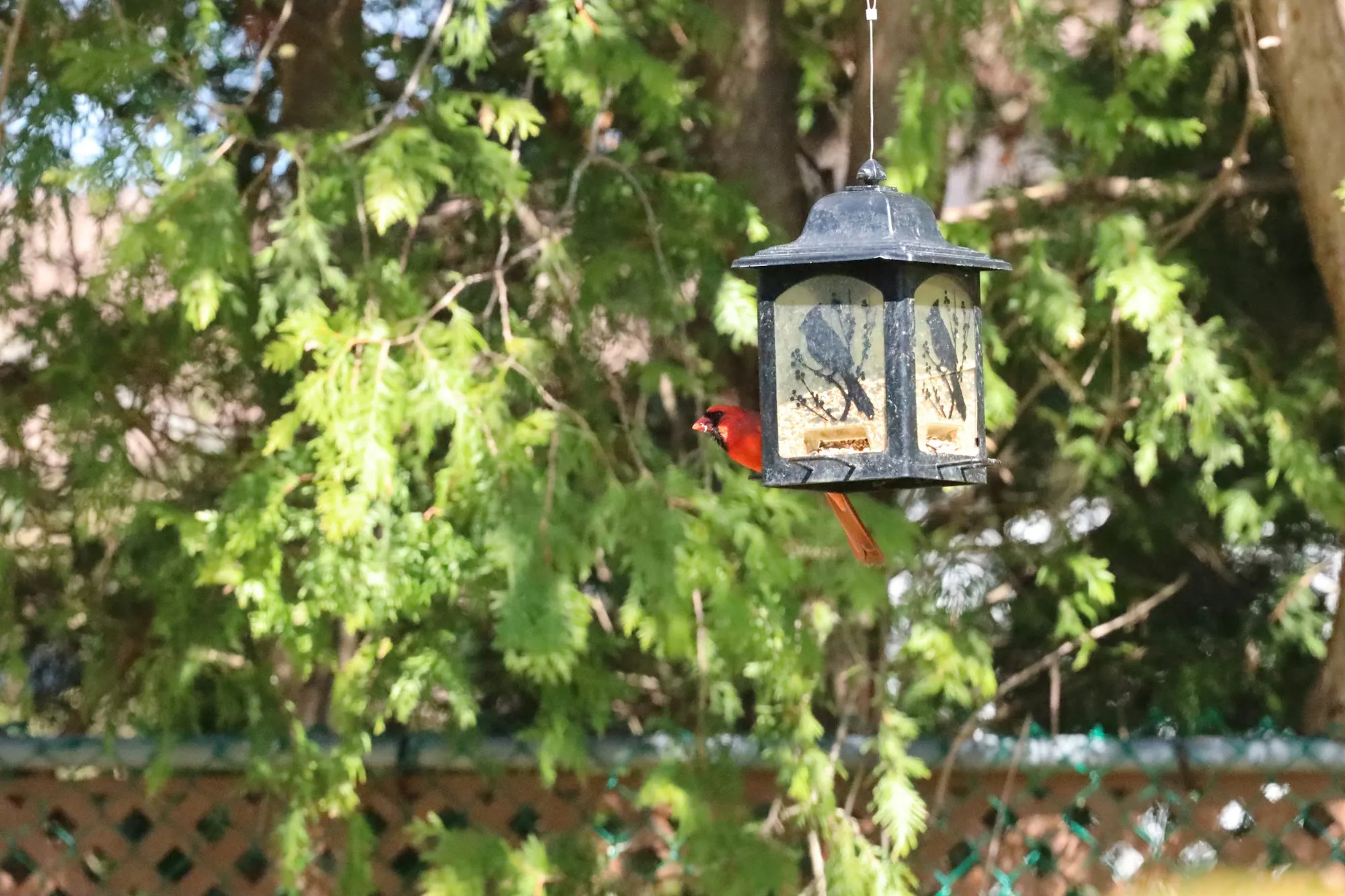
Knowing how to attract cardinals starts with one question: do they live where you do? If they do, they’re one of the easiest backyard birds to bring in. This guide covers where cardinals live, what they eat, which feeders let them feed, when they come, and what to plant. It also covers common advice we don’t recommend.
First, will cardinals come to your yard?
Check your range before you buy anything. Audubon’s field guide calls the Northern Cardinal a “Permanent resident throughout its range,” and says: “West of the Great Plains, the Northern Cardinal is mostly absent, but it is locally common in the desert Southwest.” Audubon magazine puts it more simply: cardinals are “Found across the East and parts of the Southwest” (Audubon). In Texas, Texas Parks and Wildlife says: “Cardinals are year-round residents in the eastern two-thirds of Texas” (TPWD).
If you live in the Pacific Northwest or the Mountain West, you’re unlikely to see one however well you set up. Check the range map on Audubon’s field guide page before spending money.
The good news for everyone else: because cardinals stay year-round, a cardinal-friendly yard works in every season.
What do cardinals eat?
In the wild: Audubon’s field guide says the diet is “Mostly seeds, insects, berries.” Most of it is plant matter (weed and grass seeds, waste grain, wild fruit), plus insects, spiders, centipedes and snails. Nestlings are fed mostly insects (Audubon field guide). The National Wildlife Federation says cardinals “eat more than 100 kinds of seeds and fruits” (NWF).
At the feeder:
| Food | What the source says | Notes |
|---|---|---|
| Black-oil sunflower | Audubon: “your best bet is to offer black oil sunflower seeds.” | First choice |
| Striped sunflower | Audubon: next favorite after black-oil sunflower, citing a study | Thicker shell |
| Sunflower chips (hearts) | Third in the same Audubon ranking | No shells to clean up |
| Safflower | Audubon: “Cardinals will also gladly nibble on safflower seeds.” | Often sold as squirrel-resistant; results vary |
| Peanuts, cracked corn, suet | Audubon: “Cardinals will gladly eat peanuts, cracked corn, and suet.” | Cracked corn also attracts squirrels |
| Nyjer (thistle) | Audubon says nyjer “is eagerly consumed by all the small finches” and doesn’t mention cardinals for it (Audubon) | Not a cardinal food |
Food sources: Audubon magazine, except where noted. For how these seeds compare across all backyard birds, see our guide to types of bird seed.
What to put out for cardinals
1st: Black-oil sunflower
Best bet (Audubon)
2nd: Striped sunflower
Next favorite
Thicker shell.
3rd: Sunflower chips
Third in the ranking
No shells to clean up.
Safflower
Gladly eaten
Often sold as squirrel-resistant; results vary.
Peanuts, cracked corn, suet
Gladly eaten
Cracked corn also attracts squirrels.
Nyjer (thistle)
Not a cardinal food
Eaten by small finches (Audubon).
Where to buy: Duncraft’s 5-lb bags of black-oil sunflower (opens in a new tab) ($18.95) and safflower (opens in a new tab) ($24.95) were available to order at Duncraft when we checked on October 8, 2026 (black-oil, safflower). Any fresh, filler-free bag of the same seed works.
The best feeders for cardinals
Cardinals are medium-sized and feed mostly “while hopping on the ground or in low bushes, sometimes higher in trees,” per Audubon’s field guide. The National Wildlife Federation recommends a sturdy platform or hopper feeder near shrubs or other cover.
| Feeder type | Cardinal-friendly? | Why |
|---|---|---|
| Hopper | Yes | Room to stand and feed (NWF recommends hoppers) |
| Platform / tray | Yes | Close to how they feed naturally; keep it clean and dry |
| Tube with short perches | Poor | Little room for a bird this size; a tube with a ring perch is better |
| Weight-activated (squirrel-resistant) | Only if set correctly | The shroud must not close under a cardinal’s weight |
| Caged | Usually no | Cages are sized so small birds fit through. Wild Birds Unlimited says its cages use 1½-inch openings “to allow smaller birds to feed” (WBU) |
The ratings in this table are our reading of the sources above, not measured results.
| Feeder type | Cardinal-friendly? |
|---|---|
| Hopper | Yes: room to stand and feed (NWF) |
| Platform / tray | Yes: close to how they feed naturally |
| Tube, short perches | Poor: little room; a ring perch is better |
| Weight-activated | Only if set so a cardinal doesn’t close it |
| Caged | Usually no: 1½-in. openings are for smaller birds (WBU) |
If squirrels are a problem, a weight-activated feeder with a perch ring is the usual answer. Brome’s Squirrel Buster Plus (opens in a new tab) has a weight-adjustable spring and what Brome calls a “patented Cardinal Ring System™,” holds 5.1 lb of seed, and was $129.25 on Brome’s US store on October 8, 2026. More options: our squirrel-proof feeders that let cardinals feed.
Whatever feeder you choose, keep it clean. Our guide on how to clean a bird feeder covers the routine.
Where to put a cardinal feeder
- Near cover. Audubon lists cardinal habitat as “Woodland edges, thickets, suburban gardens, towns, desert washes.” NWF says to put the feeder near shrubs or other cover.
- Low is fine. Because cardinals forage on the ground and in low bushes (Audubon), a platform feeder or a tray under a hopper suits them.
- Away from squirrel launch points and windows. Our guide to where to put a bird feeder gives the distances for cover, windows and squirrels. A baffled pole helps; see how to install a squirrel baffle.
When cardinals feed
Cardinals can turn up at any time, but they’re known for showing up early and late. The Northcentral Pennsylvania Conservancy, a land trust, says: “Cardinals are crepuscular meaning that they are most active at dawn or dusk,” and adds that they’re often the last birds to visit a feeder in the evening (NPC).
What to do: Fill the feeder in the evening so seed is waiting at first light, and check it again late in the afternoon. In snow, clear a patch of ground or a platform, since cardinals feed low (our suggestion, based on Audubon’s foraging note).
Water: baths cardinals will use
Audubon says: “A water source, such as a fountain or birdbath, will go a long way to make them feel at home.” It adds: “If winters regularly dip below freezing where you live, a heated birdbath is a good option” (Audubon).
Our picks for winter water are in best heated bird baths, and our guide to keeping a bird bath from freezing covers cheaper fixes. The API 14-inch heated bath (opens in a new tab) from that guide ($135.99) showed as currently unavailable on the maker’s store on October 8, 2026, so check other sellers or pick another bath from that guide.
Plants and cover cardinals need
Plants supply food and shelter that a feeder can’t. Sourced options:
| Plant | Type | Source that names it |
|---|---|---|
| Serviceberry | Shrub / small tree | NWF; Metroparks Toledo |
| Flowering dogwood | Small tree | NWF; Metroparks Toledo |
| Arrowwood viburnum (and other viburnums) | Shrub | NWF; Metroparks Toledo |
| Winterberry | Shrub | Metroparks Toledo |
| Mulberry | Tree | Metroparks Toledo |
| Eastern red cedar, white pine, elm | Trees | NWF |
| Coneflowers, goldenrods (left standing) | Perennials | Audubon |
Sources: NWF, Metroparks Toledo, Audubon. Metroparks Toledo names its plants as fruit sources of the red pigments in male cardinals’ feathers.
| Plant | NWF | Metroparks Toledo | Audubon |
|---|---|---|---|
| ServiceberryShrub / small tree | Named | Named | Not listed |
| Flowering dogwoodSmall tree | Named | Named | Not listed |
| Viburnums (incl. arrowwood)Shrub | Named | Named | Not listed |
| WinterberryShrub | Not listed | Named | Not listed |
| MulberryTree | Not listed | Named | Not listed |
| Eastern red cedar, white pine, elmTrees | Named | Not listed | Not listed |
| Coneflowers, goldenrodsPerennials, left standing | Not listed | Not listed | Named |
These sources are mostly eastern and midwestern, and whether a plant is native depends on where you live. Before you plant, check each species for your area in Audubon’s Native Plants Database (search by ZIP code) or with your county extension office.
Two habits that help, from Audubon:
- Build a brush pile. Audubon suggests turning downed limbs and used Christmas trees into “five-star wildlife hotels.”
- Leave the seedheads. Audubon recommends not “cutting coneflowers, goldenrods, and other perennials” whose seedheads feed birds through winter, and leaving “dead leaves where they fall.”
Helping cardinals nest
Cardinals don’t use nest boxes. Audubon’s field guide says the nest is “Usually well hidden in dense shrubs, vines, or low trees, placed 3-10 ft above ground, sometimes higher.” Texas Parks and Wildlife says: “They prefer thick underbrush for nesting.”
What helps:
- Dense shrubs and vines in the 3-to-10-foot range. NWF says cardinals prefer dense thickets and evergreens for nesting and roosting.
- Leave shrubs unpruned in spring where you can, so nests stay hidden (our suggestion).
- Natural nesting material only. Audubon’s guidance says: “Natural materials that birds could find on their own are good baselines for nesting components” (Audubon).
Brood numbers: Audubon’s field guide gives “2-3 broods per year, rarely 4,” usually with 3 or 4 eggs. That long nesting season is why feeders and cover matter from spring well into summer.
A cardinal-friendly year
| Season | What cardinals are doing | What to offer |
|---|---|---|
| Winter | Flocking. Metroparks Toledo says that in winter “they can easily be seen moving around areas in flocks looking for food.” | Black-oil sunflower, a heated bath, a cleared feeding spot after snow |
| Late winter | Singing. Audubon: “Weeks before spring, they’re among the first birds to herald its arrival.” | Keep feeders full; cover the outside of windows if a male starts attacking his reflection |
| Spring | Nesting season; window attacks are most common (Audubon) | Dense shrubs, natural nesting material, clean water |
| Summer | Raising 2–3 broods (Audubon); nestlings fed mostly insects | Water; avoid pesticides on shrubs; keep feeders clean in heat |
| Fall | Eating seeds and wild fruit | Leave seedheads and berry shrubs standing; step up feeding as natural food runs low |
A cardinal-friendly year
Winter
- Cardinals
- Flocking, looking for food
- Offer
- Black-oil sunflower, a heated bath, a cleared spot after snow
Late winter
- Cardinals
- Singing, weeks before spring
- Offer
- Full feeders; cover the outside of windows if a male attacks his reflection
Spring
- Cardinals
- Nesting; window attacks most common
- Offer
- Dense shrubs, natural nesting material, clean water
Summer
- Cardinals
- Raising 2–3 broods; nestlings fed mostly insects
- Offer
- Water; no pesticides on shrubs; clean feeders in heat
Fall
- Cardinals
- Eating seeds and wild fruit
- Offer
- Seedheads and berry shrubs left standing; more feeding as wild food runs low
The seasons are approximate and vary with latitude; the “what to offer” column is our summary of the sources above. For winter feeding in general, see what to feed birds in winter.
Why a cardinal keeps attacking your window
Audubon explains: “The bird sees its reflection in the window and is trying to drive away the potential rival.” It names Northern Cardinals and American Robins as examples and says it’s most common in the spring nesting season (Audubon).
The fix is on the outside of the glass. Audubon suggests hanging a sheet, blanket or cardboard outside the window, adding an exterior screen, marking the glass with a bar of soap, or using anti-collision decals, and stresses that “inside won’t cut it.” Maryland’s Home and Garden Information Center says you can prevent it “temporarily by covering the outside of the window with bird netting or fabric” (Ask Extension). Leave the covering up until the bird gives up, which may take a while: Audubon notes some birds “might return to do battle day after day.”
Stop the reflection: outside, not inside
Outside of the glass
Works (Audubon, Maryland HGIC)
A sheet, blanket or cardboard hung outside; an exterior screen; soap marks; anti-collision decals; bird netting or fabric. Leave it up until the bird gives up.
Inside of the glass
Doesn’t work
Audubon: “inside won’t cut it.” The reflection the bird is fighting is on the outside.
If the window is near a feeder, check the window distances in our placement guide.
Advice we don’t recommend
- Nyjer for cardinals. Some popular guides suggest it. Audubon says nyjer is “eagerly consumed by all the small finches.” Use sunflower or safflower instead.
- Yarn, string, human hair or treated pet fur as nesting material. Audubon’s nesting-material article warns that “Long strands of yarn and string can wrap around a bird,” that yarn “can get caught around a baby bird and cut off circulation as it grows,” that “human hair is a triple threat for birds,” and that “Pet fur, for example, could be dangerous if treated with flea medicine.” It adds that “Dryer lint is unsustainable in the rain, crumbling and leaving holes in an otherwise solid nest.”
- Treating the inside of the window for a reflection-fighting cardinal. Audubon: “inside won’t cut it.”
Squirrels eating the cardinal food?
Sunflower is a squirrel favorite too. Start with placement and a baffle: see how to keep squirrels off your bird feeder and how to install a squirrel baffle. Then pick a squirrel-resistant feeder, set so a cardinal doesn’t trip it, from our squirrel-proof feeder picks.
Shopping for a cardinal fan? See our gifts for bird lovers.
Related
Sources
- Audubon: How to attract Northern Cardinals (Feb 12, 2026), Northern Cardinal field guide, Top 10 foods for winter bird feeding, What nesting materials are safe for birds? (Apr 22, 2019), Why birds attack windows and mirrors (Mar 10, 2026)
- Texas Parks and Wildlife, Northern Cardinal
- National Wildlife Federation, Bird of the Week: Northern Cardinal
- Metroparks Toledo, The Winter Redbird
- Northcentral Pennsylvania Conservancy, Northern Cardinals
- Maryland Home and Garden Information Center via Ask Extension
- Wild Birds Unlimited (Winter Springs), squirrel proofing
- Products: Brome Squirrel Buster Plus, Duncraft black-oil sunflower, Duncraft safflower, API 14B heated bath (Miller)
Frequently asked questions
- What is the best food to attract cardinals?
- Black-oil sunflower seed. Audubon says it's your best bet, with striped sunflower seed and sunflower chips next. Cardinals also eat safflower, peanuts, cracked corn and suet.
- What kind of feeder do cardinals prefer?
- A sturdy hopper or platform feeder near shrubs or other cover, as the National Wildlife Federation suggests. Cardinals forage mostly on the ground or in low bushes, according to Audubon, so a low platform or a tray under the feeder also works. Small tube perches and cages built for small birds are poor choices.
- What time of day do cardinals come to feeders?
- They can come at any time, but a Pennsylvania land trust describes cardinals as most active at dawn and dusk, and often the last birds at a feeder in the evening. Fill the feeder in the evening so seed is there at first light.
- Do cardinals use birdhouses?
- No. Audubon says cardinal nests are usually well hidden in dense shrubs, vines or low trees, 3 to 10 feet above the ground. Plant dense shrubs instead of putting up a nest box.
- Why is a cardinal attacking my window?
- It sees its reflection and is trying to drive away what looks like a rival, Audubon explains. It's most common in the spring nesting season. Cover or mark the outside of the glass until the behavior stops; Audubon says treating the inside won't work.
- Do cardinals eat safflower?
- Yes. Audubon says cardinals will gladly nibble on safflower seeds. It's often sold as a seed squirrels avoid, but results vary; see our types of bird seed guide.
- Do cardinals stay all winter?
- Yes. Audubon calls the Northern Cardinal a permanent resident throughout its range, and Texas Parks and Wildlife says cardinals are year-round residents in the eastern two-thirds of Texas.
Keep reading

Written by
Research and editing
The Feeder Field editorial team researches backyard birding gear and bird feeding for US readers. We compare manufacturer specifications, subscription terms and long-term owner feedback, and we check feeding and bird-behavior advice against the Cornell Lab of Ornithology, Audubon and university extension services. Articles are drafted with the help of AI tools, then fact-checked and edited by our team before they go live. Every guide says whether it is researched or hands-on tested, and we update buying guides at least every six months.