Guide
Why Are No Birds Coming to My Feeder? 10 Causes and How to Fix Each
No birds at your feeder? Usually it's the season. A symptom-by-symptom guide to 10 common causes, from hawks and moldy seed to new-feeder lag.
Updated
Disclosure: We may earn a commission when you buy through links on this page. Read our affiliate disclosure.
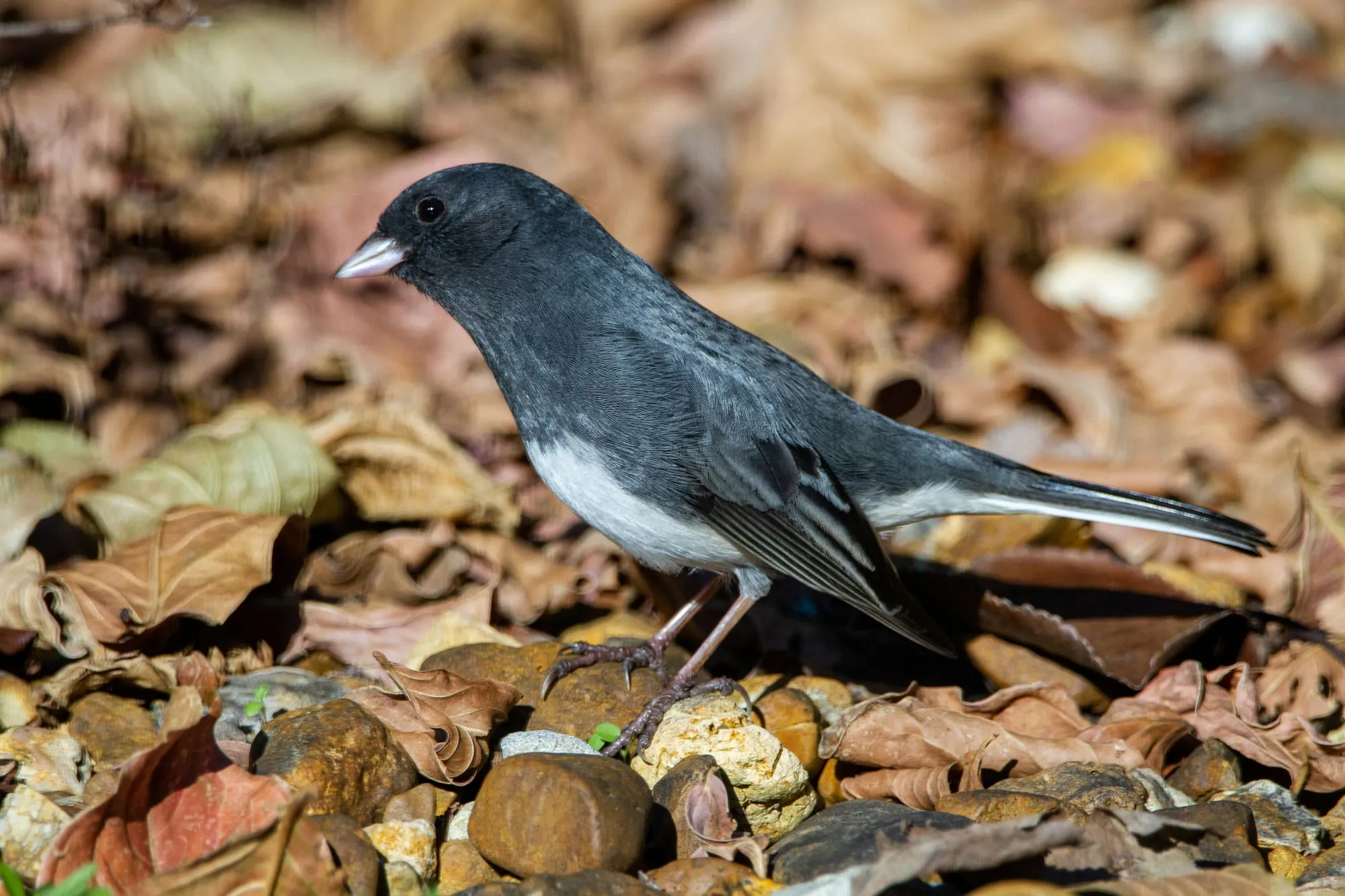
“Why are no birds at my feeder?” is one of the most common questions in October and November. Usually the birds are fine and eating somewhere else. This page starts with what changed, matches it to the likely cause, and points you to the page that fixes it.
Start here: what changed?
Pick the row that matches what you see.
| What you notice | Likely cause | First fix | More help |
|---|---|---|---|
| New feeder, no birds yet | Birds haven’t found it, or it’s far from cover | Scatter a little seed nearby; hang it within about 10 ft of shrubs | Where to put a bird feeder |
| Birds gone almost overnight | A hawk, a cat, or something moved or broke | Look for a perched hawk or a cat’s hiding spot; pause feeding a few days if a hawk stays | Hawk section below |
| Slow drop in fall | Wild food peak; summer birds gone, winter birds not settled | Keep a small amount of fresh seed out and wait | Fall section below |
| Slow drop in late winter | Stale or moldy seed, a long empty spell, a new feeder next door | Empty, clean, refill with fresh seed | How to clean a bird feeder |
| One kind of bird missing | It isn’t in your area this season, or it’s a finch that varies by year | Check your regional list and this winter’s finch forecast | Regional section below |
| Birds land but don’t eat | Wet, clumped or moldy seed, or seed the feeder can’t serve | Dump it, dry the feeder, switch to black-oil sunflower | Types of bird seed |
| Birds with swollen or crusty eyes | An eye disease that spreads at feeders | Take feeders down, disinfect, wait before rehanging | Sick-birds section below |
| Squirrels or a flock of big birds take over | Competition at the feeder | Baffle, squirrel-resistant feeder, seed change | How to keep squirrels off a bird feeder |
No birds at the feeder? Check in this order
- Do any birds have swollen or crusty eyes, or are there sick or dead birds under the feeder?YesTake the feeders down and disinfect themArkansas Game and Fish says to keep the feeder down for at least two weeks.Nogo to the next step.
- Is the feeder new?YesHelp the birds find itScatter a little seed nearby and hang it within about 10 feet of shrubs or trees.Nogo to the next step.
- Did the birds vanish almost overnight?YesLook for a hawk, a cat or a changed setupIf a hawk keeps coming back, pause feeding for a few days.Nogo to the next step.
- Is the seed musty, clumped, wet or moldy, or do birds land and leave?YesDump it, clean and dry the feeder, refill smallerFresh black-oil sunflower suits the most feeder birds.Nogo to the next step.
- Does the feeder empty while you never see songbirds?Nogo to the next step.
- Is just one kind of bird missing?YesIt may have left for the seasonCheck your regional list and this winter’s finch forecast.Nogo to the next step.
- It’s probably the season. Keep a little fresh seed out, keep the feeder clean, and wait.Birds usually come back when wild food runs low or snow and ice cover it.
1. It’s fall, and birds have other food
This is the most common answer, and it’s usually the right one.
Birds don’t depend on feeders
For most birds, feeders are a supplement, not the main source of food. The best-known number comes from a study by Margaret Brittingham and Stanley Temple (Journal of Wildlife Management, 1992). About 83 Black-capped Chickadees used two sunflower-seed feeders at two deciduous forest sites in Wisconsin over the winters of 1983–85. The birds got roughly 21% of their daily energy from the feeders (Conservation Evidence).
Share of daily energy from feeders in one study
Black-capped Chickadees, two Wisconsin forest sites, winters 1983–85 (Brittingham & Temple 1992)
- From the feeders
- About 21%
- Everything else
- About 79%, from food they found away from the feeders
That’s one species, in one state, decades ago, so don’t stretch it to every bird in every yard. The same summary also says the chickadees used the feeders most in autumn and least in spring, and that temperature didn’t affect their feeder use (Conservation Evidence). So a quiet fall isn’t a law of nature.
Most guidance still describes the usual pattern. Penn State Extension, in a page co-written by the same Margaret Brittingham, says feeder use is usually low in summer, fall and early winter (Penn State Extension). Both can be true: a Wisconsin forest feeder isn’t every suburban yard.
The gap between summer and winter birds
There’s a timing gap too. Derek Lovitch, a Maine naturalist who co-owns Freeport Wild Bird Supply, explained a slow fall in his field notes (November 2, 2017):
- The long-distance migrants, such as warblers, had already left.
- Flexible migrants such as Dark-eyed Juncos and White-throated Sparrows stay as far north as they can for as long as they can.
- A record-warm October lowered birds’ energy needs, and with no snow or ice, wild food stayed easy to reach.
- Heavy seed and cone crops that year kept birds in the woods (Maine Birding Field Notes).
He sells bird seed as well as studying birds, so read it as one expert’s field notes, not a study. His point matches the extension guidance: how much wild food is around matters most.
The fall gap, in three stages
1Summer birds leave
Long-distance migrants, such as warblers, head south.
2The gap
Juncos and White-throated Sparrows stay north as long as they can. Seeds, cones and berries are easy to reach, so feeders stay quiet.
3Snow and ice
Wild food gets covered, and birds turn to feeders. In one Maine yard, juncos went from about 4–6 to 28.
What to do: Keep a small amount of fresh seed out so it doesn’t go stale, and keep the feeder clean. Don’t fill a big feeder to the top for birds that aren’t coming yet.
2. A new feeder nobody has found yet
Penn State Extension says that if you’ve just set up a feeding site, the birds may not have found it yet, and suggests scattering seed around the feeders to make the site more visible (Penn State Extension). We couldn’t find a reliable source for how many days that takes. The “birds find feeders in X days” figures online come from store blogs and unsourced pages, so we don’t repeat them.
What helps a new feeder get found:
- Cover nearby. Penn State recommends placing feeders within 10 feet of protective cover such as trees and shrubs (Penn State Extension). Our guide to where to put a bird feeder shows how that fits with window and squirrel distances.
- Visible seed. Our suggestion: start with a little seed on an open tray, which is easier to spot than seed inside a tube, then add the tube.
- A seed most birds eat. Black-oil sunflower draws the widest range of feeder birds; see types of bird seed.
If you’re out all day, a camera bird feeder records visits for you, so you can check whether the feeder is really empty.
3. A hawk is hunting your feeder
If the birds were busy one day and gone the next, look up. Penn State Extension says Cooper’s and Sharp-shinned Hawks occasionally hunt birds at feeders (Penn State Extension). Illinois Extension notes that a feeder can get added to a Cooper’s Hawk’s hunting circuit (Illinois Extension).
What the sources suggest:
- Give birds cover. Penn State calls a well-planted yard the best way to protect songbirds from hawks (Penn State Extension).
- Pause the feeder. If a hawk keeps coming back, Penn State says you can take feeders down for a couple of days. Illinois Extension suggests a week or two, so the hawk learns to hunt elsewhere (Illinois Extension).
- Keep perspective. Penn State says hawks are a natural part of the ecosystem and a sign of a healthy environment (Penn State Extension).
4. A cat, or something else spooked them
Cats hunt from hiding. Our placement guide covers the distance to keep between a feeder and the shrubs or decks a cat can crouch under. Also check the simple things: did the feeder move, fall, get a new baffle, or end up next to a new grill or play set? Our suggestion, not a sourced rule: give birds a few days to get used to a changed setup before you change anything else.
5. The seed has gone bad
Birds may land, pick and leave if the seed is stale or wet. Penn State Extension says to check seed for mold and insects, especially seed that has sat for a long time, to store it somewhere cool and dry, and to throw out moldy seed (Penn State Extension). South Carolina’s Department of Natural Resources says mold or bacteria commonly form on wet bird seed in winter, and that mold can cause fatal bird diseases (SC DNR).
Check it: Tip out a handful from the bottom of the tube. Clumps, a musty smell, sprouting or a fuzzy coating mean it goes in the trash, not on the ground. Then clean the feeder and let it dry fully.
Refill smaller. On platform feeders, Penn State says to put out only one day’s worth of food at a time (Penn State Extension). A half-full tube that empties in a few days stays fresher than a full one that sits for weeks.
Fresh seed (checked October 30, 2026): Duncraft Black Oil Sunflower, 5 lb (opens in a new tab), $18.95, available to order (Duncraft)
6. The seed doesn’t suit the feeder or the birds
Mismatches are common. Tiny nyjer seed belongs in a finch feeder with small ports, and big sunflower seeds won’t pass through those ports (a practical note, not a sourced rule). Some cheap mixes are padded with seeds most feeder birds pass over; our seed guide shows which ones, based on a 1980 US Fish and Wildlife Service feeding study. If cardinals or chickadees ignore the feeder, switch to black-oil sunflower. For cardinals specifically, see how to attract cardinals; for woodpeckers, how to attract woodpeckers.
7. A dirty feeder or sick birds
A feeder caked with old seed and droppings can spread disease. The Arkansas Game and Fish Commission says conjunctivitis is mainly a finch disease, though it has been reported in other wild birds too. It can make birds’ eyes swell and leave a crusty layer over the eye, and the bacteria spread through feeders and other surfaces infected birds have touched (Arkansas Game and Fish).
If you see birds with swollen or crusty eyes, or sick or dead birds under the feeder:
- Take the feeders down. Arkansas Game and Fish says to remove the feeder for at least two weeks (Arkansas Game and Fish). South Carolina DNR says to stop feeding immediately if sick or dead birds appear (SC DNR).
- Wear rubber gloves and disinfect the feeder with a bleach-and-water solution, as Arkansas Game and Fish advises.
- Let it dry completely before you rehang it with fresh seed.
We don’t diagnose bird diseases. The US Fish and Wildlife Service says to report wild bird deaths to your state wildlife agency right away, and to wear impermeable gloves and wash your hands if you can’t avoid handling wildlife (USFWS). The full cleaning routine, with ratios and how often to clean, is in how to clean a bird feeder.
8. Squirrels or bully birds are taking over
If the feeder empties but you never see songbirds, something else is eating the seed. Squirrels can drain a tube fast, and flocks of grackles, starlings or House Sparrows can crowd smaller birds out. Fixes, in order:
- Block access: a baffle on a pole, placed out of jumping range. See how to keep squirrels off a bird feeder.
- Change the feeder: weight-activated feeders close the ports under a squirrel. Our picks are in best squirrel-proof bird feeders.
- Change the seed: safflower puts off many gray squirrels and some blackbirds, though not all. The evidence is in does safflower seed keep squirrels away?
9. The birds you expect aren’t in your area this season
If one bird is missing rather than all of them, it may simply have left. Juncos and White-throated Sparrows arrive for winter, and Audubon says nearly all Ruby-throated Hummingbirds leave North America in fall, wintering from Mexico to Costa Rica or Panama (Audubon). Some birds are also far more common at feeders in some states than others. Our regional guides show which birds turn up at feeders in your state: Northeast and Midwest.
Winter finches change from year to year. Pine Siskins, redpolls, Evening Grosbeaks and Purple Finches move south in big numbers only in some winters. The Finch Research Network’s Winter Finch Forecast 2026–2027 (Tyler Hoar, posted September 25, 2026) expects good eastern seed crops to keep many birds in the woods rather than at feeders. It expects a sizable Pine Siskin irruption in the Northeastern states and no big redpoll flight. It doesn’t expect any big finch irruptions in the southeastern states, though it says a small to moderate siskin flight there is possible (Finch Research Network).
10. Bad weather, then a rush
Cold, snow and ice change everything. When snow covers seeds on the ground and ice coats the trees, birds turn to feeders. In Lovitch’s December 13, 2017 update, after a second snowfall and a coat of ice, the Dark-eyed Juncos at his home went from about 4–6 to 28, and American Goldfinches that had been feeding in the woods flocked to his nyjer feeders (Maine Birding Field Notes).
Be ready before the first storm: fresh seed, a clean feeder, suet for woodpeckers, and open water. Our winter feeding guide covers the menu, and a heated bird bath keeps water open when everything else freezes.
A 5-minute checklist
Run through these before you change feeders or seed:
- Smell and squeeze the seed. Musty, clumped or wet? Throw it out (types of bird seed).
- Check the ports and tray. Clogged ports or a soggy tray stop birds from feeding.
- Look for cover. Is there a shrub or tree within about 10 feet for birds to escape to (where to put a bird feeder)?
- Scan for a hawk perch on nearby branches, poles or fence posts, and watch for a hawk passing at the same time each day.
- Look for squirrels and cats. Hulls on the ground with no birds around, or a cat under the deck (how to keep squirrels off a bird feeder).
- Write down your last cleaning date. If you can’t remember it, clean today (how to clean a bird feeder).
If all six check out and it’s fall, wait. The birds are probably eating wild food and will be back when it runs low.
Should I take my feeders down because of bird flu?
Not as a general rule, but check your state. The US Fish and Wildlife Service says bird feeders are unlikely to increase the spread of avian influenza, though feeders do bring songbirds together and raise the risk of other diseases (USFWS). That’s one more reason to keep them clean.
If you keep chickens or other poultry, keep wild birds away from them. Audubon magazine quotes a USDA spokesperson saying poultry caregivers should prevent contact between wild birds and poultry, and Audubon recommends taking feeders down if at least one of your local agencies advises it (February 24, 2025) (Audubon). Check your state wildlife agency before winter.
Sources
- Conservation Evidence: Brittingham & Temple (1992), Use of winter bird feeders by black-capped chickadees, Journal of Wildlife Management 56:103–110 (summary)
- Penn State Extension, Winter Bird Feeding: The Basics (Beck and Brittingham, updated August 5, 2024)
- Penn State Extension, Hawks hanging around bird feeders (Brittingham, updated October 6, 2025)
- Illinois Extension, Voice of the Wild, Episode 91: Cooper’s Hawk (February 13, 2026)
- Maine Birding Field Notes (Derek Lovitch), Why There Are No Birds at Your Feeders Right Now (November 2, 2017, updated December 13, 2017)
- Arkansas Game and Fish Commission, Keep feeders clean to reduce chance of disease in backyard birds (January 23, 2019)
- South Carolina DNR, Reminder to keep your bird feeders clean (January 4, 2021)
- US Fish and Wildlife Service, Avian Influenza
- Audubon magazine, What Does the Avian Flu Surge Mean for Your Bird Feeders? (February 24, 2025)
- National Audubon Society, Ruby-throated Hummingbird
- Finch Research Network, Winter Finch Forecast 2026–2027
- Product: Duncraft black-oil sunflower, 5 lb
Frequently asked questions
- Why have birds stopped coming to my feeder?
- In fall the most common reason is plenty of wild food: seeds, berries, acorns and insects. If the drop was sudden, look for a hawk, a cat or a change at the feeder. If it was gradual, check the seed for clumps or mold and check when you last cleaned the feeder.
- How long does it take birds to find a new feeder?
- No source we trust gives a reliable number of days. Penn State Extension says birds may simply not have found a new feeding site yet and suggests scattering some seed around the feeders to make it more visible. Put it within about 10 feet of shrubs or trees, use black-oil sunflower, and keep it filled.
- Why are there no birds at my feeder in fall?
- Wild food peaks in fall, and the summer birds have left before the winter flocks settle in. Penn State Extension says feeder use is usually low in summer, fall and early winter. One caveat: a Wisconsin study of chickadees in the 1980s found they used feeders most in autumn, so a quiet fall isn't universal.
- Can a hawk keep birds away from my feeder?
- Yes. Penn State Extension says Cooper's and Sharp-shinned Hawks occasionally hunt birds at feeders. It calls a well-planted yard the best protection and says you can take feeders down for a couple of days if a hawk keeps coming. Illinois Extension suggests a week or two.
- Should I take my feeders down because of bird flu?
- Not as a general rule. The US Fish and Wildlife Service says bird feeders are unlikely to increase the spread of avian influenza, though feeders do raise the risk of other diseases, so keep them clean. If you keep chickens or other poultry, keep wild birds away from your flock, and follow your state wildlife agency if it advises taking feeders down.
- Will the birds come back?
- Usually, yes, once wild food runs low or gets covered by snow and ice. A Maine naturalist who wrote about a slow fall in 2017 reported that after December snow and ice, the juncos at his home went from about 4–6 to 28, and goldfinches crowded his nyjer feeders.
Keep reading

Written by
Research and editing
The Feeder Field editorial team researches backyard birding gear and bird feeding for US readers. We compare manufacturer specifications, subscription terms and long-term owner feedback, and we check feeding and bird-behavior advice against the Cornell Lab of Ornithology, Audubon and university extension services. Articles are drafted with the help of AI tools, then fact-checked and edited by our team before they go live. Every guide says whether it is researched or hands-on tested, and we update buying guides at least every six months.