Guide
Common Backyard Birds of the Midwest: A State-by-State Feeder Guide
Which birds Midwest feeders get, from Project FeederWatch data for all 12 states: north vs south, the chickadee line, Plains birds and what to feed.
Updated
Disclosure: We may earn a commission when you buy through links on this page. Read our affiliate disclosure.
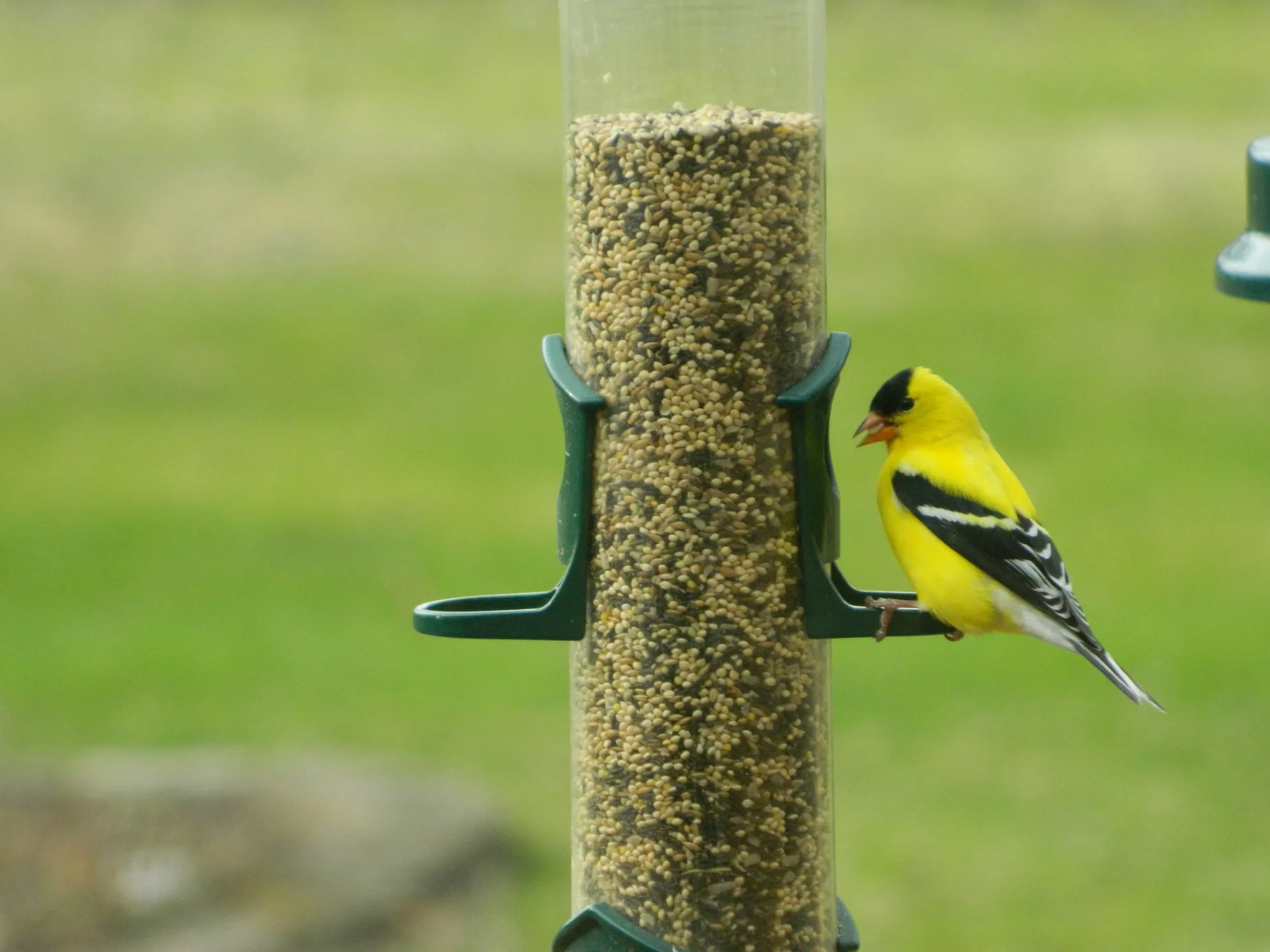
The common backyard birds of the Midwest aren’t one list. They’re two, plus a Plains fringe. This guide shows FeederWatch’s numbers for every state from Ohio to North Dakota, where the northern and southern feeder birds part ways, which chickadee you’re looking at, and what to put out for each bird. If you live in New York, Pennsylvania or New England, our Northeast guide covers your states.
The Midwest’s top feeder birds, state by state
We use the 12 states the US Census Bureau groups as the Midwest: Illinois, Indiana, Iowa, Kansas, Michigan, Minnesota, Missouri, Nebraska, North Dakota, Ohio, South Dakota and Wisconsin (CDC/NCHS). FeederWatch’s own regional groupings don’t match that list, so we use its state pages only.
Each figure is FeederWatch’s “Percentage of Sites Visited” for the 2024–25 season, copied as published. FeederWatch’s Explanation of Terms page has the exact definition; we couldn’t open it, so we use the figure as labeled. A dash means the bird wasn’t in that state’s top 25. FeederWatch counts run November 1 to April 30, so this is a cold-season picture (FeederWatch).
Great Lakes and Corn Belt states
Great Lakes and Corn Belt: Percentage of Sites Visited, FeederWatch 2024–25 (Nov–Apr)
| Bird | MN(474) | WI(436) | MI(585) | IA(108)small sample | IL(403) | IN(291) | OH(670) | MO(293) |
|---|---|---|---|---|---|---|---|---|
| Chickadee | 94.40 | 92.31 | 93.19 | 79.46 | 83.49* | 86.50* | 90.54* | 85.48* |
| Dark-eyed Junco | 91.80 | 90.17 | 92.38 | 89.29 | 91.27 | 90.03 | 91.38 | 89.35 |
| Downy Woodpecker | 89.60 | 86.11 | 90.44 | 91.07 | 87.03 | 89.39 | 89.57 | 88.39 |
| Northern Cardinal | 80.00 | 83.12 | 88.82 | 83.93 | 93.63 | 91.64 | 94.02 | 94.52 |
| Blue Jay | 84.40 | 78.85 | 90.76 | 75.89 | 73.82 | 81.99 | 86.93 | 85.81 |
| House Finch | 75.60 | 77.14 | 73.91 | 87.50 | 84.20 | 91.00 | 89.43 | 86.45 |
| Red-bellied Woodpecker | 78.20 | 82.69 | 83.47 | 75.00 | 80.90 | 82.64 | 84.01 | 76.45 |
| White-breasted Nuthatch | 83.80 | 80.98 | 87.52 | 75.89 | 73.11 | 81.03 | 82.89 | 64.19 |
| American Goldfinch | 81.20 | 84.62 | 82.82 | 73.21 | 73.11 | 82.96 | 79.55 | 78.39 |
| Mourning Dove | 49.00 | 82.27 | 85.58 | 60.71 | 83.25 | 82.96 | 83.03 | 87.10 |
| House Sparrow | 54.80 | 63.68 | 68.23 | 92.86 | 89.15 | 83.28 | 81.78 | 70.32 |
| Hairy Woodpecker | 75.00 | 69.02 | 64.02 | 52.68 | 48.82 | 54.34 | 60.64 | 45.81 |
| Tufted Titmouse | not in top 25 | not in top 25 | 73.10 | 26.79 | 27.83 | 76.21 | 81.22 | 75.16 |
| Carolina Wren | not in top 25 | not in top 25 | 32.74 | not in top 25 | not in top 25 | 59.49 | 68.98 | 66.45 |
| Northern Flicker | 36.80 | 26.71 | 41.65 | 43.75 | 29.25 | 61.09 | 48.12 | 58.39 |
| Pileated Woodpecker | 45.00 | 30.98 | 31.12 | not in top 25 | not in top 25 | not in top 25 | not in top 25 | not in top 25 |
| Eastern Bluebird | not in top 25 | not in top 25 | not in top 25 | not in top 25 | not in top 25 | 63.34 | 43.95 | 56.45 |
*Listed by FeederWatch as “Carolina/Black-capped Chickadee.” In the other four states the entry is Black-capped Chickadee. Header numbers are FeederWatchers reporting. †Small sample: Iowa’s 108 reporters make its column less reliable than Ohio’s 670.
Plains states
Plains states: Percentage of Sites Visited, FeederWatch 2024–25 (Nov–Apr)
| Bird | KS(111)small sample | NE(62)small sample | SD(40)small sample | ND(21)small sample |
|---|---|---|---|---|
| Dark-eyed Junco | 88.71 | 88.57 | 80.95 | 90.91 |
| Downy Woodpecker | 79.84 | 82.86 | 78.57 | 86.36 |
| House Sparrow | 76.61 | 85.71 | 78.57 | 81.82 |
| House Finch | 85.48 | 85.71 | 73.81 | 59.09 |
| Blue Jay | 82.26 | 88.57 | 66.67 | 63.64 |
| Chickadee | 77.42* | 48.57 | 66.67 | 90.91 |
| Northern Cardinal | 86.29 | 80.00 | 35.71 | not in top 25 |
| Red-bellied Woodpecker | 75.81 | 77.14 | 38.10 | not in top 25 |
| White-breasted Nuthatch | 54.84 | 68.57 | 45.24 | 81.82 |
| Hairy Woodpecker | 28.23 | 47.14 | 54.76 | 72.73 |
| Northern Flicker | 59.68 | 68.57 | 54.76 | 40.91 |
| Eurasian Collared-Dove | not in top 25 | 52.86 | 69.05 | 45.45 |
| Harris's Sparrow | 36.29 | 28.57 | not in top 25 | 22.73 |
| Red-breasted Nuthatch | not in top 25 | not in top 25 | 33.33 | 54.55 |
*Kansas lists “Carolina/Black-capped Chickadee”; the other three list Black-capped. †Small samples, all four states: Kansas (111), Nebraska (62), South Dakota (40) and especially North Dakota (21 FeederWatchers). With so few reporters, a handful of yards can move a figure a lot. Read these as hints, not rankings.
Sources: FeederWatch Top 25, 2024–25: MN, WI, MI, IA, IL, IN, OH, MO, KS, NE, SD, ND (all read October 11, 2026).
Two Midwests: north vs south
Put Minnesota next to Missouri and they look like different regions. Here’s what the 2024–25 lists show. This is our reading of FeederWatch data, not a range map:
| Pattern | North (MN, WI, MI) | South (OH, IN, IL, MO) |
|---|---|---|
| No. 1 bird | Black-capped Chickadee in all three | Northern Cardinal in all four |
| Hairy Woodpecker | 64% to 75% of sites | 46% to 61% |
| Pileated Woodpecker | In the top 25 (31% to 45%) | Not in the top 25 |
| Tufted Titmouse | Absent from MN and WI lists; 73.10% in MI | 75% to 81% in OH, IN, MO; 27.83% in IL |
| Carolina Wren | Absent from MN and WI; 32.74% in MI | 59% to 69% in OH, IN, MO; absent in IL |
| Chickadee entry | Black-capped | Combined Carolina/Black-capped |
Two Midwests at the feeder: Minnesota vs Missouri
Percentage of Sites Visited, Project FeederWatch 2024–25
Chickadee
- Minnesota
- 94.40%
- Missouri
- 85.48%
Minnesota’s entry is Black-capped Chickadee; Missouri’s is the combined Carolina/Black-capped entry.
Northern Cardinal
- Minnesota
- 80.00%
- Missouri
- 94.52%
Hairy Woodpecker
- Minnesota
- 75.00%
- Missouri
- 45.81%
Pileated Woodpecker
- Minnesota
- 45.00%
- Missouri
- not in top 25
Tufted Titmouse
- Minnesota
- not in top 25
- Missouri
- 75.16%
Carolina Wren
- Minnesota
- not in top 25
- Missouri
- 66.45%
Mourning Dove
- Minnesota
- 49.00%
- Missouri
- 87.10%
House Finch
- Minnesota
- 75.60%
- Missouri
- 86.45%
Michigan sits in between: the chickadee leads, but titmice reach 73.10%. Illinois is the odd one in the south: cardinals lead, yet titmice are at only 27.83% and the Carolina Wren is missing. Iowa is its own case: the House Sparrow tops its small-sample list at 92.86%. Minnesota stands out for doves: Mourning Doves were at 49.00% of sites there, against 82% to 87% in Wisconsin, Michigan, Illinois, Indiana, Ohio and Missouri.
Year-round residents
Audubon calls each of these a permanent or mostly permanent resident. Each heading links to its Audubon page, the source for the ID and food notes. Figures from Iowa and the four Plains states rest on small samples (see the table notes). For seed details, see types of bird seed.
Black-capped Chickadee and Carolina Chickadee
- Look for: a tiny gray bird with a black cap and black bib. The Carolina is generally a little smaller, with less white edging in the wing (Audubon).
- Feeds on: seeds and suet; both come readily to feeders, Audubon says. The Black-capped often flies off with one sunflower seed to tuck into bark.
- Midwest share: Black-capped at 94.40% in Minnesota and 93.19% in Michigan; the combined entry at 90.54% in Ohio.
- Midwest note: which one you have depends on latitude. See the chickadee line section below.
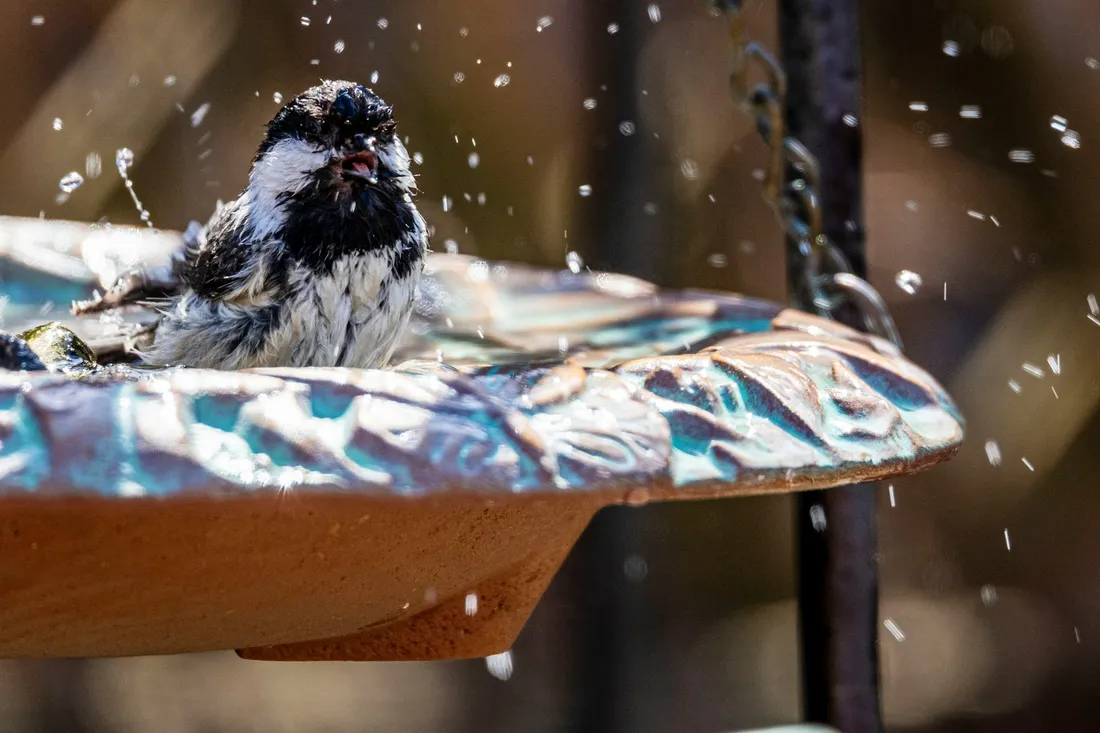
Tufted Titmouse (Baeolophus bicolor)
- Look for: a gray, crested bird with a black forehead and rusty flanks.
- Feeds on: sunflower and suet; it holds seeds in its feet and hammers them open, Audubon says.
- Midwest share: Ohio 81.22%, Indiana 76.21%, Iowa 26.79%.
- Midwest note: It’s a southern-tier bird in this data, missing from Minnesota’s and Wisconsin’s top 25. Audubon says it is still pushing north and feeders may be helping.
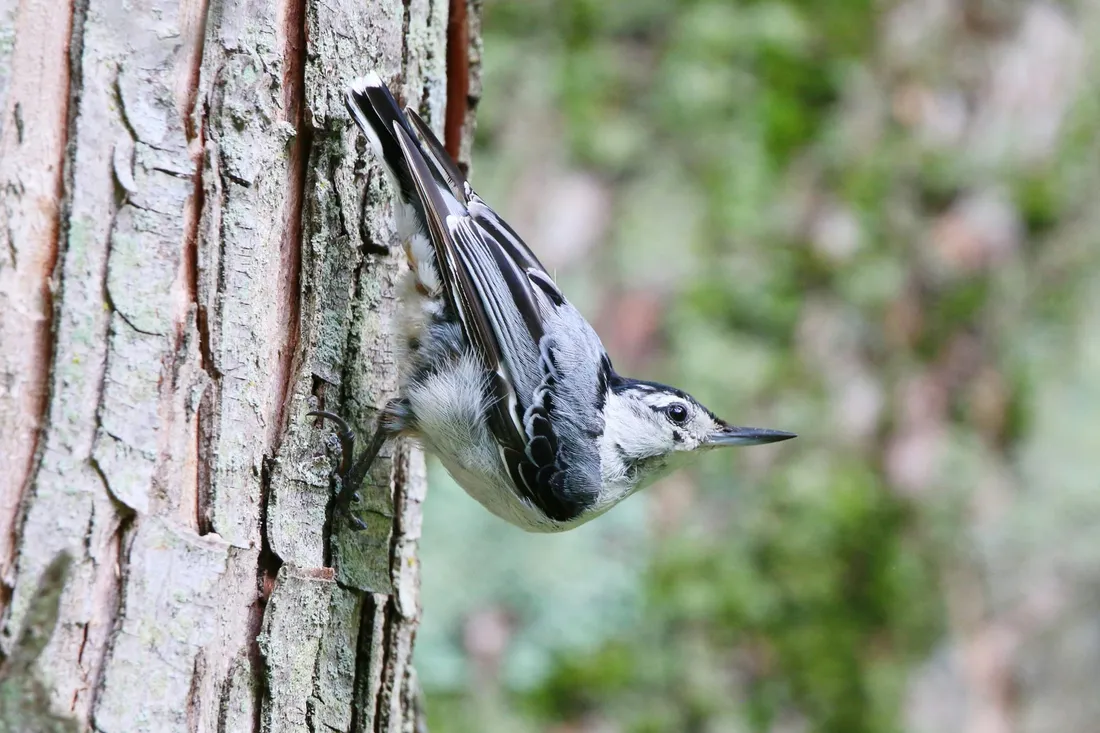
White-breasted Nuthatch (Sitta carolinensis)
- Look for: a gray-backed bird with a bright white face and chest and a beady black eye; it gives a nasal “yank-yank” call.
- Feeds on: sunflower seeds or suet. Audubon says seeds can be more than 60% of its winter diet.
- Midwest share: Michigan 87.52%, Minnesota 83.80%, North Dakota 81.82%, Missouri 64.19%.
- Midwest note: Audubon says it needs large trees, which may explain lower figures on the open Plains (Kansas 54.84%, South Dakota 45.24%). That link is our guess, not a finding.
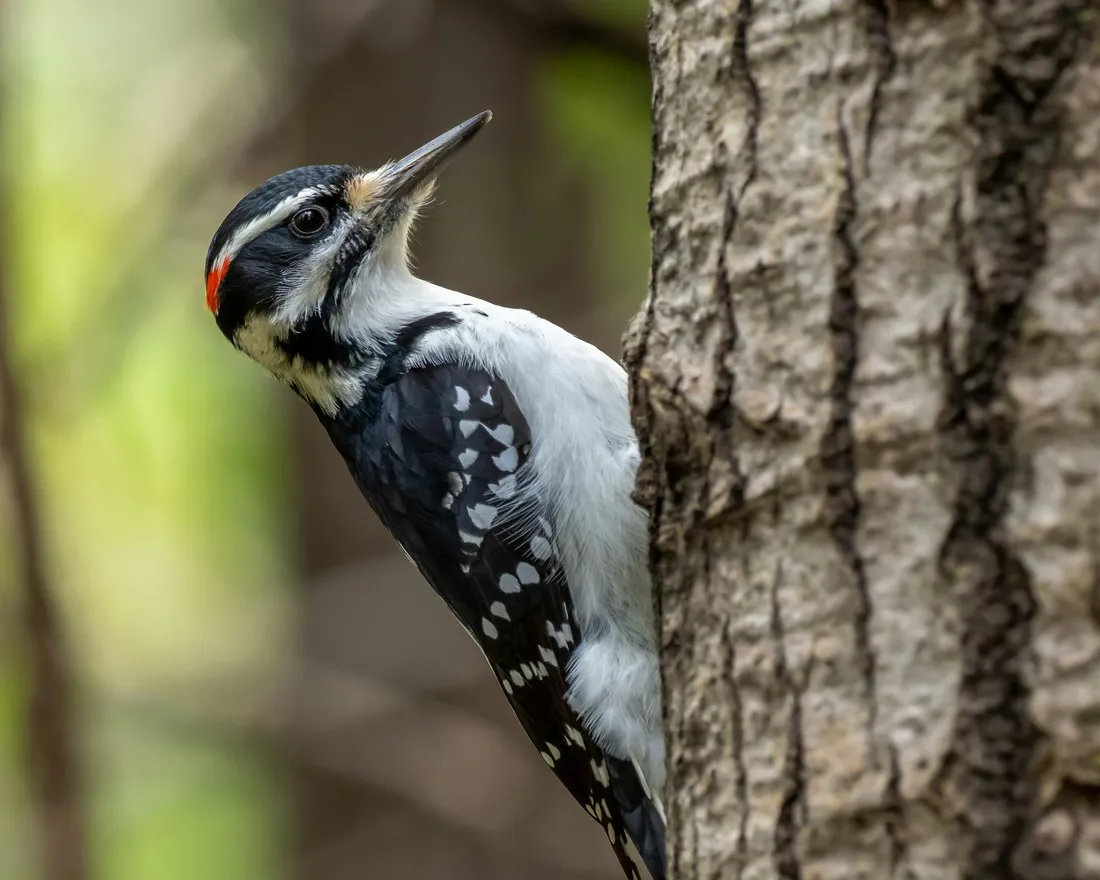
Downy Woodpecker (Dryobates pubescens)
- Look for: a small black-and-white woodpecker with a very short bill; the male has a red spot on the nape.
- Feeds on: suet.
- Midwest share: Iowa 91.07%, Michigan 90.44%, South Dakota 78.57%.
- Midwest note: It was between 78.57% and 91.07% in every state, one of the two most even birds on the page (the junco is the other). Audubon says the northernmost birds may move some distance south in winter.
Hairy Woodpecker
- Look for: the Downy’s bigger twin, with a much longer bill.
- Feeds on: suet. Audubon says it does more pounding and excavating in trees than most smaller woodpeckers.
- Midwest share: Minnesota 75.00%, North Dakota 72.73%, Kansas 28.23%.
- Midwest note: In this data it gets more common the farther north you go. Our Northeast guide has the full Downy-vs-Hairy ID.
Red-bellied Woodpecker (Melanerpes carolinus)
- Look for: a back of narrow black and white bars, and red on the head; the red belly is usually hard to see.
- Feeds on: suet; Audubon says nuts and seeds taken in fall may be stored in bark crevices for winter.
- Midwest share: Ohio 84.01%, Michigan 83.47%, South Dakota 38.10%; not in North Dakota’s top 25.
- Midwest note: Audubon says northern populations “such as those in Michigan” may move south during harsh winters, though “much is unknown.”
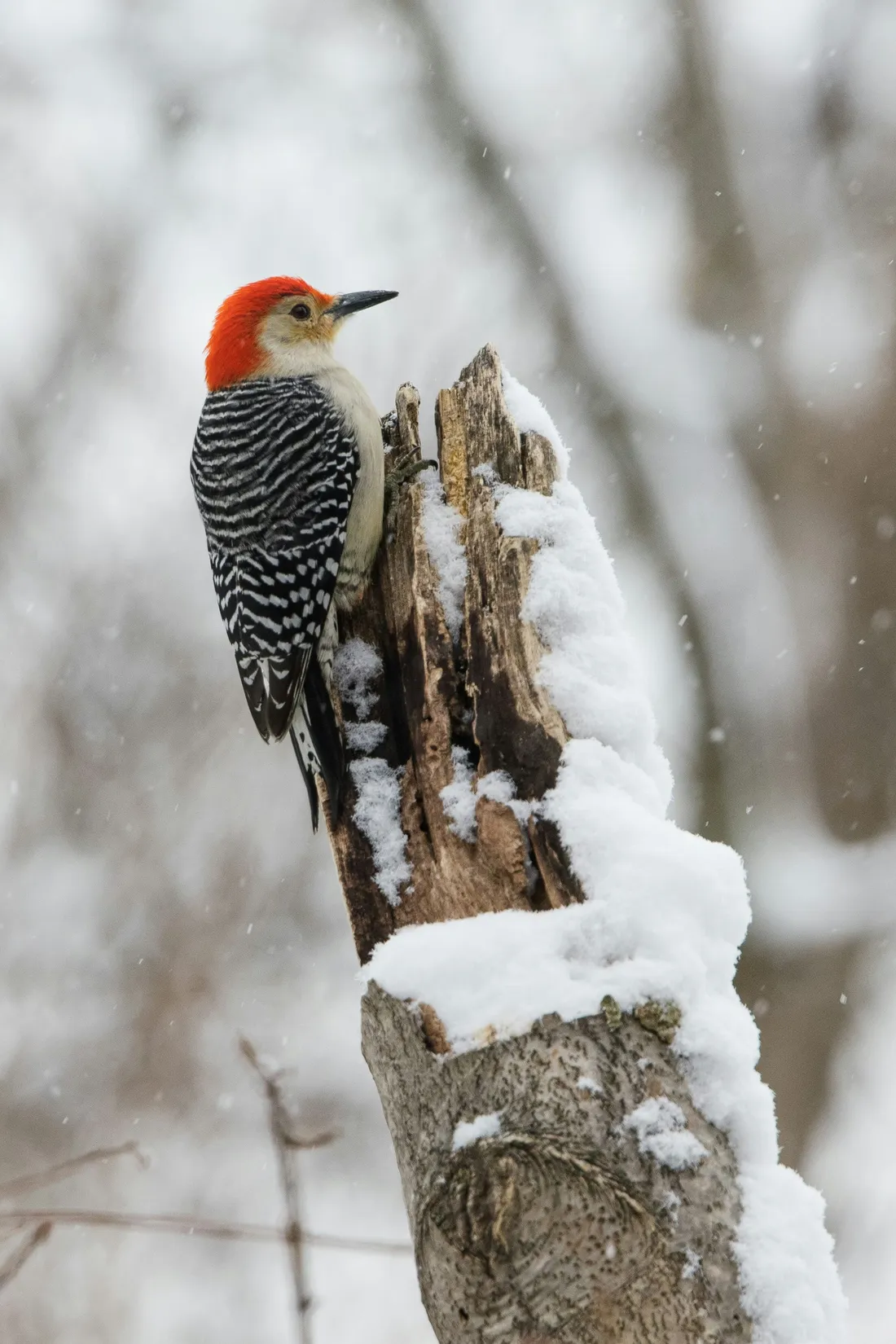
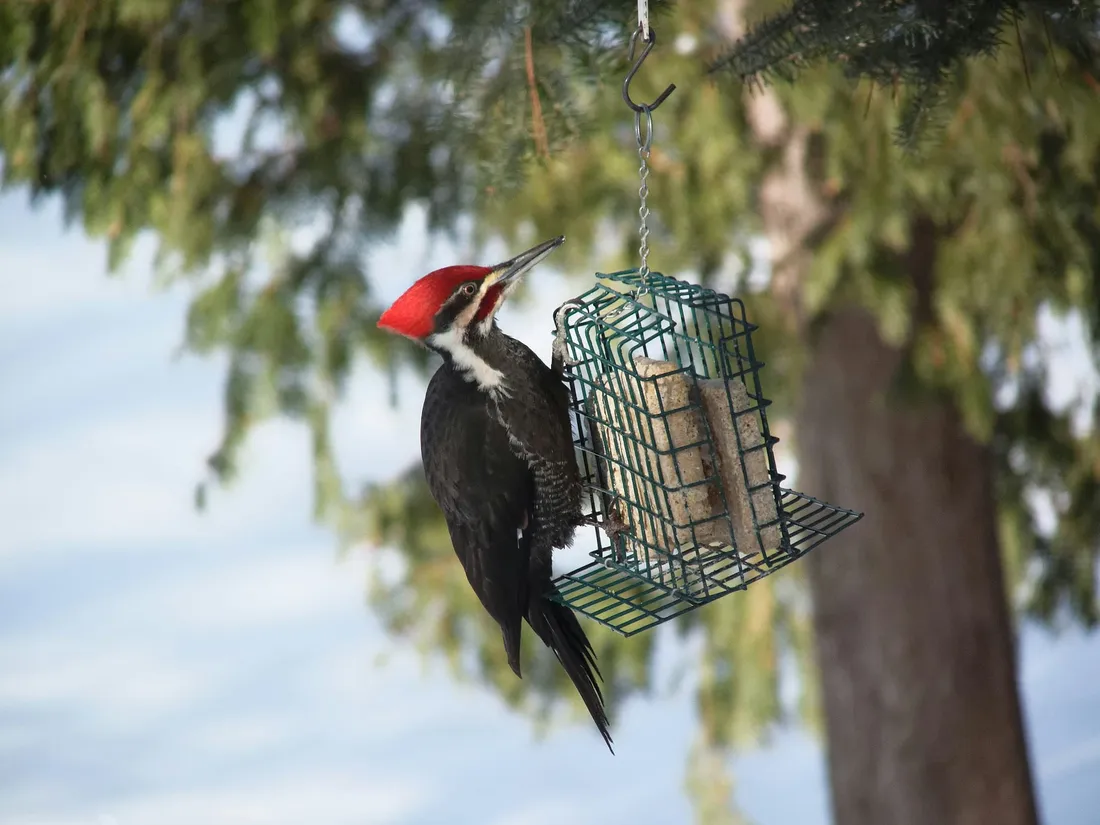
Pileated Woodpecker
- Look for: a crow-sized, mostly black woodpecker with a red crest and a white neck stripe; Audubon calls it the largest living woodpecker in North America.
- Feeds on: carpenter ants dug from wood, which can be up to 60% of its diet, Audubon says. Its Audubon page doesn’t mention feeders. For feeder setups, see how to attract woodpeckers and our suet feeder picks.
- Midwest share: Minnesota 45.00%, Michigan 31.12%, Wisconsin 30.98%.
- Midwest note: It lives in woodlots “as long as some large trees are present” (Audubon), which fits its northern, forested spread in this data.
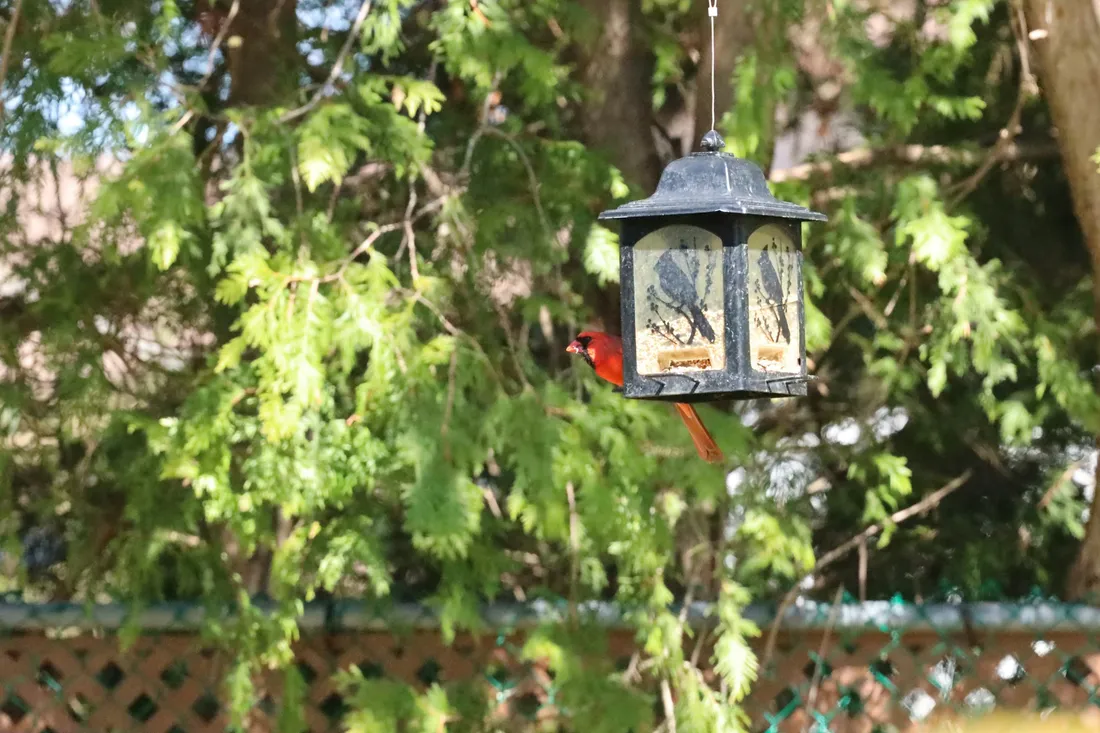
Northern Cardinal (Cardinalis cardinalis)
- Look for: an all-red, crested male; a duller, crested female with a heavy pink bill.
- Feeds on: sunflower first; Audubon says it readily comes to feeders, where it favors sunflower seeds. More in how to attract cardinals.
- Midwest share: Missouri 94.52%, Ohio 94.02%, South Dakota 35.71%; not in North Dakota’s top 25.
- Midwest note: Audubon says it is mostly absent west of the Great Plains, and the Plains data show the drop.
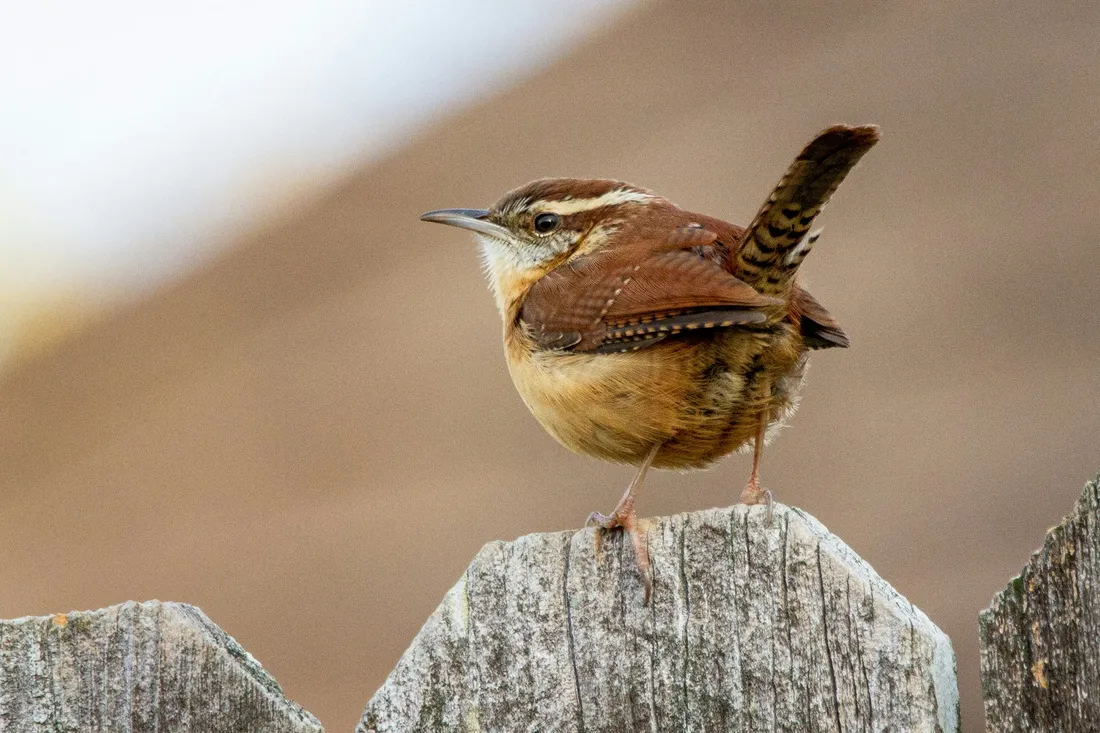
Carolina Wren (Thryothorus ludovicianus)
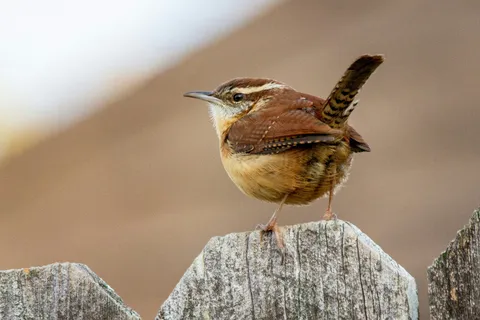
- Look for: a rich brown wren with a bold white eyebrow and warm buff underparts.
- Feeds on: mostly insects; at feeders, sometimes suet and peanuts (Audubon).
- Midwest share: Ohio 68.98%, Missouri 66.45%, Kansas 56.45%, Michigan 32.74%.
- Midwest note: Audubon says populations in the northern part of its range drop after harsh winters. In a cold Midwest January, suet may matter to it (our suggestion).
Partial migrants
These stay through winter in much of their range, but Audubon says some move south. Expect them all year in varying numbers.
Blue Jay (Cyanocitta cristata)
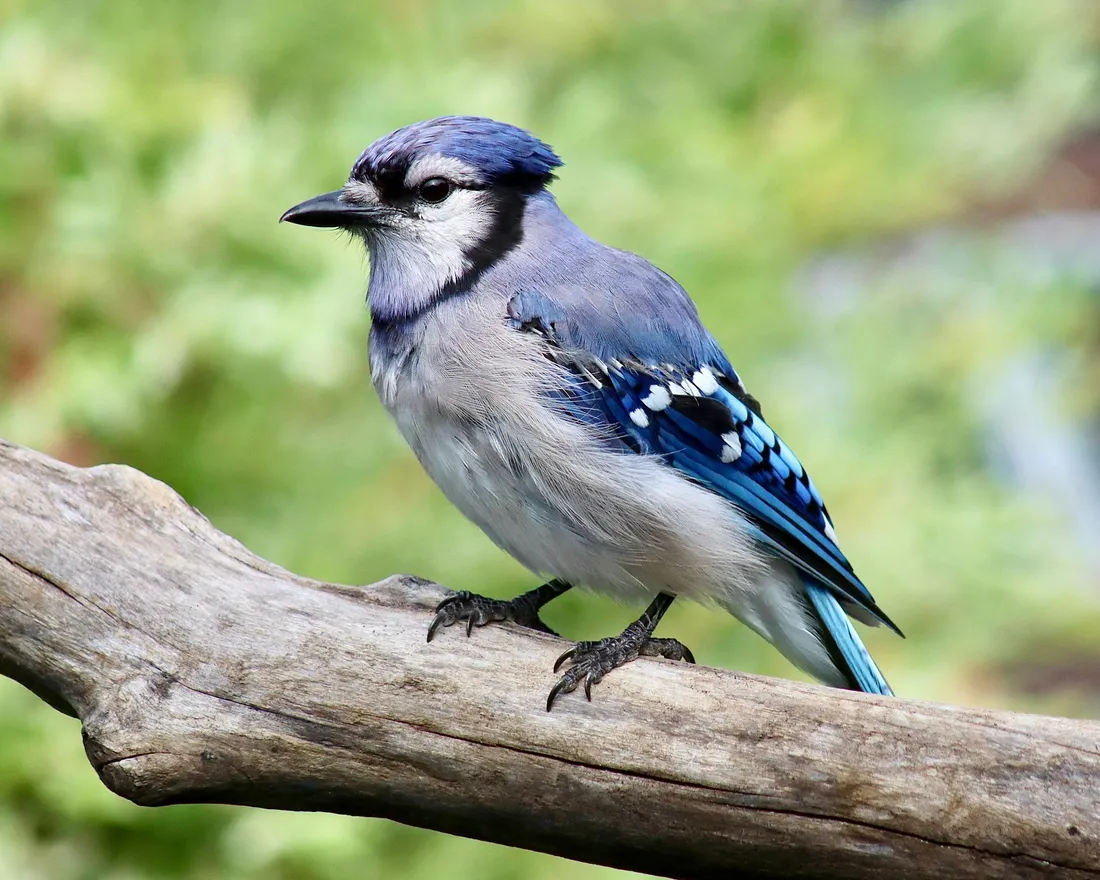
- Look for: a big, crested blue bird with a black necklace and white in the wings and tail.
- Feeds on: seeds, suet, and peanuts (a preferred food in the Geis study).
- Midwest share: Michigan 90.76%, Nebraska 88.57%, North Dakota 63.64%.
- Midwest note: Audubon says some years bring big southward flights, but migrants don’t go south of the United States.
Mourning Dove (Zenaida macroura)
- Look for: a plain, slim dove whose long tail tapers to a point, edged with white spots.
- Feeds on: seeds, often on the ground below the feeder; millet suits it.
- Midwest share: Missouri 87.10%, Michigan 85.58%, North Dakota 36.36%.
- Midwest note: Audubon says many leave northern areas in fall, which fits the low Minnesota and Dakota figures.
American Goldfinch (Spinus tristis)
- Look for: in winter, a yellowish-brown to gray finch with black wings and bold pale wing bars.
- Feeds on: nyjer and sunflower hearts in a finch feeder.
- Midwest share: Wisconsin 84.62%, Indiana 82.96%, North Dakota 50.00%.
- Midwest note: Audubon says migration is irregular, with more birds staying north when food is plentiful.
House Finch (Haemorhous mexicanus)
- Look for: males with red on the forehead, eyebrow and chest and streaked sides; females with plain brown faces.
- Feeds on: seeds, especially sunflower.
- Midwest share: Indiana 91.00%, Ohio 89.43%, North Dakota 59.09%.
- Midwest note: Audubon says birds spreading west from a 1940 New York release met their western kin on the Great Plains about 50 years later. Watch for swollen eyes (conjunctivitis, per Audubon) and clean your feeders if you see it.
American Robin, Eastern Bluebird and Northern Flicker
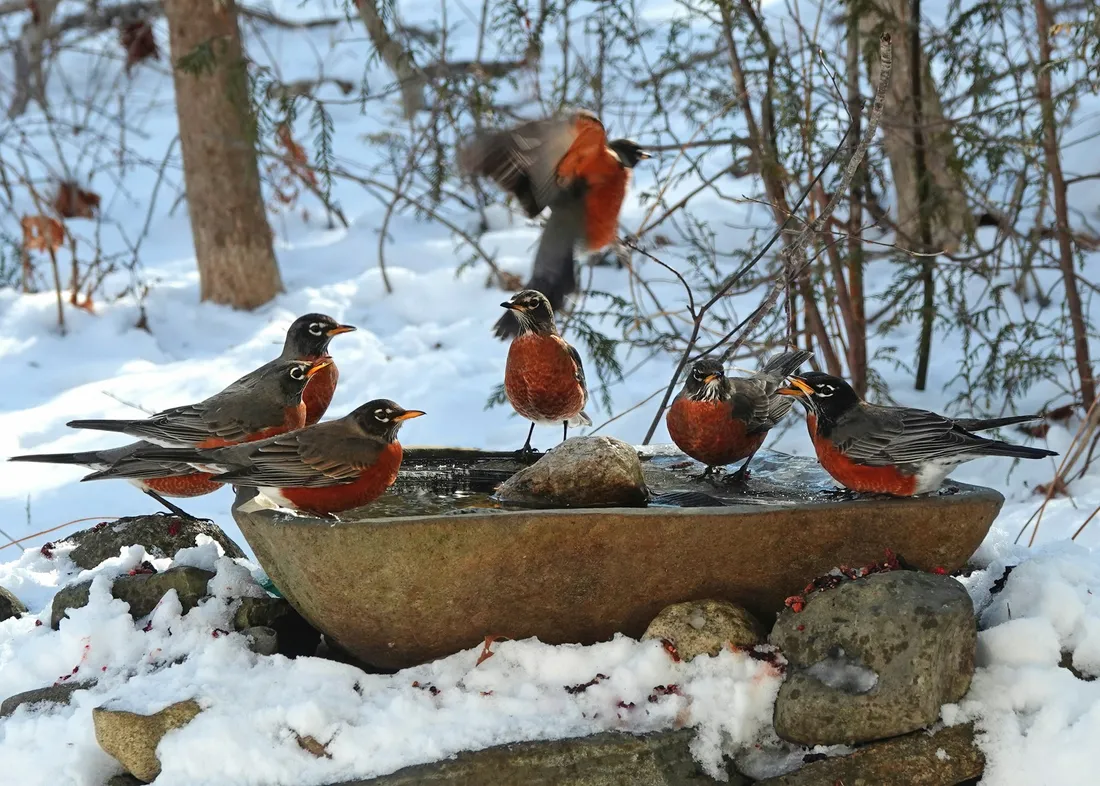
- Look for: the robin’s brick-red chest; the bluebird’s blue back and reddish-brown chest; the flicker’s barred brown back, black chest patch and spotted belly.
- Feeds on: none of the three has feeder foods on its Audubon page. In winter, robins and bluebirds eat mostly fruit and berries, and flickers eat ants, plus fruit in fall and winter.
- Midwest share: robin 56% to 72% in every state; bluebird Indiana 63.34%, Missouri 56.45%; flicker Nebraska 68.57%, Indiana 61.09%.
- Midwest note: the Eastern Bluebird made the top 25 only in Indiana, Missouri, Ohio and Kansas (25.81%). Berry shrubs and open water bring all three in. See what to feed birds in winter for mealworms.
Winter visitors
Dark-eyed Junco (Junco hyemalis)
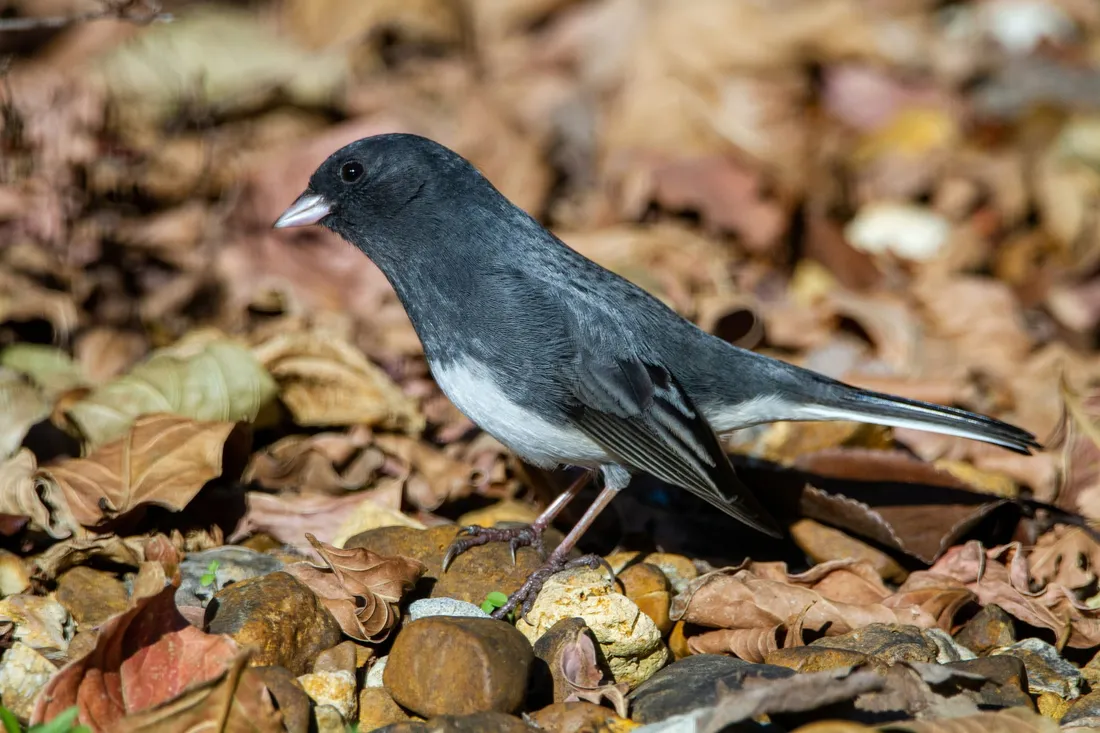
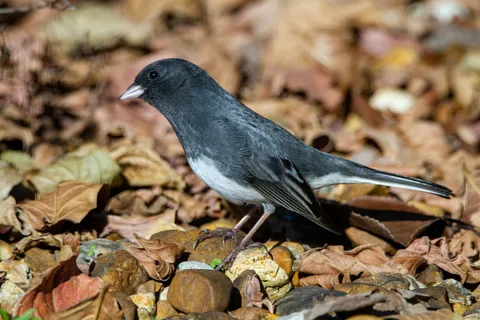
- Look for: a gray, sparrow-sized bird that flashes white outer tail feathers as it flies up. Audubon describes several forms, including the Slate-colored (solid gray head, back and sides) and the Oregon (dark hood, chestnut back, rusty sides).
- Feeds on: seed on the ground below feeders; white proso millet was its preferred food in the Geis study.
- Midwest share: Michigan 92.38%, Ohio 91.38%, South Dakota 80.95%.
- Midwest note: the most consistent winter bird in the Midwest, at 80% or more in all 12 states, and first on all four Plains lists (tied with the Blue Jay in Nebraska and the chickadee in North Dakota).
American Tree Sparrow
- Look for: a rusty cap, a two-toned bill and a dark spot on the chest.
- Feeds on: small seeds; Audubon says it often visits feeders with juncos. Scatter millet.
- Midwest share: Michigan 44.73%, South Dakota 35.71%, Wisconsin 32.27%.
- Midwest note: an Arctic nester (Audubon) that made the top 25 in eight Midwest states, all except Ohio, Indiana, Missouri and Kansas. Audubon says females winter somewhat farther south than males.
Red-breasted Nuthatch (Sitta canadensis)
- Look for: a sparrow-sized nuthatch with a black eye line, white eyebrow and buffy-orange underparts.
- Feeds on: conifer seeds in winter (Audubon); at feeders, offer sunflower and suet (our suggestion).
- Midwest share: North Dakota 54.55%, Wisconsin 36.75%, Michigan 36.30%.
- Midwest note: its winter range shifts a lot from year to year (Audubon). For 2026–27, the Finch Research Network expects good eastern cone crops to hold many in the north.
This winter’s finch outlook for the Midwest
The Finch Research Network’s Winter Finch Forecast 2026–2027 (Tyler Hoar, posted September 25, 2026) expects poor seed crops in the central boreal forest to push finches into eastern Canada, the Great Lakes and the northeastern US (Finch Research Network). Points for Midwest feeders:
- Redpolls: no big flight expected. If a small one happens, the western Great Lakes is the most likely place.
- Purple Finches: many are expected in the Great Lakes region. They were already in the 2024–25 top 25 in Missouri (43.23%), Minnesota (40.60%), Wisconsin (38.25%), Iowa (30.36%) and Kansas (25.81%).
- Evening Grosbeaks: small to medium-sized flocks expected in the better spots around the Great Lakes. Audubon says they are “very fond of sunflower seeds.”
- Pine Siskins: in the 2024–25 lists for North Dakota (36.36%), South Dakota (28.57%) and Minnesota (26.80%). Audubon says their winter occurrence is very erratic.
For how to tell a Purple Finch from a House Finch, see the look-alike section of our Northeast guide.
Black-capped or Carolina? The chickadee line
The problem: the two chickadees look almost identical, and the line between them runs through the southern Midwest.
What the research says: a Cornell Lab study published in Current Biology on March 6, 2014, tracked the zone where the two species meet and interbreed. In its Pennsylvania study area, the zone averaged 21 miles wide, sat where average winter lows were between 14°F and 20°F, and moved north by about 0.7 mile a year over the previous decade (Newswise). That study was done in Pennsylvania, not the Midwest, so it doesn’t map the line for your state.
What FeederWatch shows: Minnesota, Wisconsin, Michigan, Iowa, Nebraska and both Dakotas list only the Black-capped Chickadee. Ohio, Indiana, Illinois, Missouri and Kansas list “Carolina/Black-capped Chickadee.” If you live in one of those five, either species could be at your feeder.
Telling them apart (Audubon): the Carolina has noticeably less white edging on the wing feathers and a cleaner, more restricted bib, and its call is higher-pitched and faster. The Cornell release adds that the Carolina’s song has four notes, against the Black-capped’s two. Audubon cautions that where they overlap, each species can learn the other’s song, so voice alone isn’t proof. Range is still the best clue: Audubon calls the Carolina “Best identified by its more southern range.”
The full side-by-side, with the hybrid-zone diagram, is in our Northeast guide.
Out on the Plains: Kansas, Nebraska and the Dakotas
The Plains lists are built on small samples (21 to 111 FeederWatchers), but they share a few things the eastern Midwest doesn’t:
- Eurasian Collared-Dove: a pale brown dove with a narrow black neck ring and big white patches in the outer tail. It ranked fifth in South Dakota (69.05%) and also made the Nebraska (52.86%) and North Dakota (45.45%) lists. Audubon says it was introduced accidentally into the Bahamas in 1974, soon reached Florida, and has spread west and north since the 1980s. Its page doesn’t mention feeders but says it eats bread crumbs and other food people provide.
- Harris’s Sparrow: a big sparrow (7 to 8 inches) with a black face, a pink bill and a bright white belly. It was on the Kansas (36.29%), Nebraska (28.57%) and North Dakota (22.73%) lists. Audubon says it nests in north-central Canada, winters “mainly on the southern Great Plains,” and arrives mostly in November. Flocks feed on the ground near brush; a millet tray beside shrubs is our suggestion.
- Fewer cardinals and Red-bellied Woodpeckers. Both fall from about 76% to 86% of sites in Kansas to 36% to 38% in South Dakota, and neither made North Dakota’s list.
- More Hairy Woodpeckers and nuthatches up north. North Dakota had the Hairy at 72.73% and the Red-breasted Nuthatch at 54.55%, the highest Red-breasted figure in the Midwest.
Non-native birds
The House Sparrow (first released in North America at New York in 1851, per Audubon) leads Iowa at 92.86% and ranks third in Illinois (89.15%). The European Starling, brought over in 1890, was at 80.06% of Indiana sites and 78.86% in Ohio. Audubon says the House Sparrow has probably affected some native birds by competing for nest sites and food, and that the starling has hurt some native hole-nesters, such as bluebirds. The US Fish and Wildlife Service says these two “don’t belong to families covered by the MBTA” (USFWS). Your state may still have its own rules.
To keep them from crowding your feeders, follow our seed guide: keep millet, cracked corn and peanut hearts out of hanging feeders, and consider striped sunflower.
Summer-only birds
Not in FeederWatch’s winter counts. Check range maps on All About Birds for your county.
- Baltimore Oriole: orange and black. Audubon says it is widespread east of the Great Plains and often interbreeds with Bullock’s Oriole on the Plains, so Plains birds can look in-between. It takes sugar water and fruit at feeders, and many leave in July and August.
- Rose-breasted Grosbeak: males have a black head, big white wing spots and a rosy triangle on the chest. It winters in the tropics. Its Audubon page doesn’t mention feeders.
- Ruby-throated Hummingbird: the one breeding hummingbird of eastern North America; it winters from Mexico to Costa Rica or Panama. Audubon says to skip red dye in nectar and clean feeders often.
- Indigo Bunting: males are dark blue in spring and summer; females are brown. Many cross the Gulf of Mexico on migration, Audubon says, and they winter in the tropics. Its Audubon page doesn’t mention feeders.
What to put out for Midwest birds
| If you want | Put out | In |
|---|---|---|
| Chickadees, nuthatches, titmice, cardinals, finches, jays | Black-oil sunflower | Hopper, tube or platform |
| Downy, Hairy, Red-bellied, Pileated Woodpeckers; Carolina Wren | Suet | Cage feeder; a long tail-prop model for Pileateds |
| Juncos, tree sparrows, Harris’s Sparrows, doves | White proso millet | Low tray near shrubs |
| Goldfinches, siskins, redpolls | Nyjer or sunflower hearts | Finch tube or sock |
| Blue Jays, titmice, woodpeckers | Unsalted peanuts | Mesh feeder |
Food matches our types of bird seed guide. For the winter menu and what to avoid, see what to feed birds in winter. For placement, see where to put a bird feeder.
Starter setup (checked October 11, 2026)
- Duncraft Black Oil Sunflower, 5 lb (opens in a new tab): $18.95, available to order (Duncraft)
- For northern yards with Pileateds: Recycled Double Cake Pileated Suet Feeder (opens in a new tab), 22½ in. tall with an extended tail-prop area, holds 2 cakes, $49.95 at Duncraft (marked down from $59.95), available to order (Duncraft). More picks: best suet feeders for woodpeckers
- API 14B heated bird bath (opens in a new tab): $135.99 list, unavailable on the maker’s store on October 11, 2026; check other sellers (Miller Manufacturing)
Keeping water open in a Midwest winter
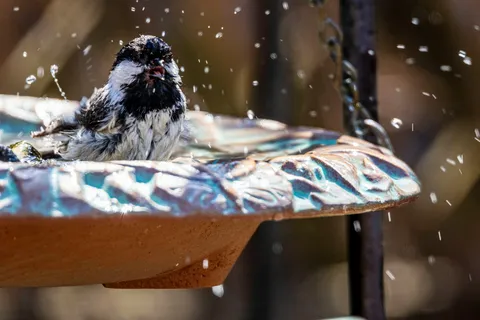
In a long freeze, ponds, puddles and birdbaths can stay locked up for days on end. A heated bath gives birds a reliable drink, and it can draw in berry-eaters like robins and bluebirds that may ignore your seed. See our heated bird bath picks, or how to keep a bird bath from freezing for options without a heater.
Watching them
Telling a Hairy from a Downy, or a Purple Finch from a House Finch, is much easier with binoculars; our binoculars for beginners guide covers what to buy. A camera feeder lets you check visitors from your phone.
Count your birds: Project FeederWatch
FeederWatch, from the Cornell Lab of Ornithology and Birds Canada, opens its season on November 1 and runs through April 30 (FeederWatch). You can tally counts in real time on a phone or tablet, or enter them on the website (FeederWatch). The Plains states had the fewest reporters in 2024–25 (North Dakota had 21), so a Plains count adds a lot. Join here.
Sources
- Project FeederWatch (Cornell Lab of Ornithology and Birds Canada), Top 25, 2024–25: MN, WI, MI, IA, IL, IN, OH, MO, KS, NE, SD, ND; Join or renew; Home
- National Audubon Society field guide: species pages linked in each heading
- Newswise: Warming temperatures are pushing two chickadee species and their hybrids northward (March 6, 2014)
- Finch Research Network, Winter Finch Forecast 2026–2027
- US Fish and Wildlife Service, final list of non-native bird species (March 15, 2005)
- CDC National Center for Health Statistics, Geographic region (US Census Bureau regions and divisions)
- Products: Duncraft black-oil sunflower, Recycled Double Cake Pileated Suet Feeder at Duncraft, API 14B heated bath
Frequently asked questions
- What is the most common backyard bird in the Midwest?
- It depends on where you live. In Project FeederWatch's 2024–25 counts, the Black-capped Chickadee ranked first in Minnesota, Wisconsin and Michigan, and the Northern Cardinal ranked first in Ohio, Indiana, Illinois and Missouri. The House Sparrow led in Iowa. The Dark-eyed Junco ranked first in Kansas, Nebraska, South Dakota and North Dakota (tied with the Blue Jay in Nebraska and the chickadee in North Dakota), though those Plains lists rest on small samples.
- Which chickadee lives in my state?
- Black-capped is the northern species and Carolina is the southern one. FeederWatch lists only Black-capped Chickadees for Minnesota, Wisconsin, Michigan, Iowa, Nebraska and the Dakotas, and a combined Carolina/Black-capped entry for Ohio, Indiana, Illinois, Missouri and Kansas.
- What birds stay in the Midwest all winter?
- Audubon describes chickadees, Tufted Titmice, White-breasted Nuthatches, Downy, Hairy, Red-bellied and Pileated Woodpeckers, Northern Cardinals and Carolina Wrens as permanent or mostly permanent residents. Juncos, American Tree Sparrows and Harris's Sparrows are mainly winter visitors.
- Do Pileated Woodpeckers come to backyards in the Midwest?
- In the north, yes. FeederWatch's 2024–25 lists put the Pileated Woodpecker at 45.00% of Minnesota sites, 31.12% in Michigan and 30.98% in Wisconsin. It wasn't in the top 25 of any other Midwest state. Audubon says it needs woods where some large trees are present.
- What should I feed Midwest birds in winter?
- Black-oil sunflower in a hopper or tube, suet for woodpeckers and nuthatches, and white proso millet on a low tray for juncos and sparrows. In a long freeze, a heated bird bath matters as much as the food.
Keep reading

Written by
Research and editing
The Feeder Field editorial team researches backyard birding gear and bird feeding for US readers. We compare manufacturer specifications, subscription terms and long-term owner feedback, and we check feeding and bird-behavior advice against the Cornell Lab of Ornithology, Audubon and university extension services. Articles are drafted with the help of AI tools, then fact-checked and edited by our team before they go live. Every guide says whether it is researched or hands-on tested, and we update buying guides at least every six months.