Guide
Common Backyard Birds of the Southeast: A State-by-State Feeder Guide
Which birds Southeast feeders get, from Project FeederWatch's 2025–26 data for 9 states: cardinal country, pine-woods birds, winter warblers and Florida.
Updated
Disclosure: We may earn a commission when you buy through links on this page. Read our affiliate disclosure.
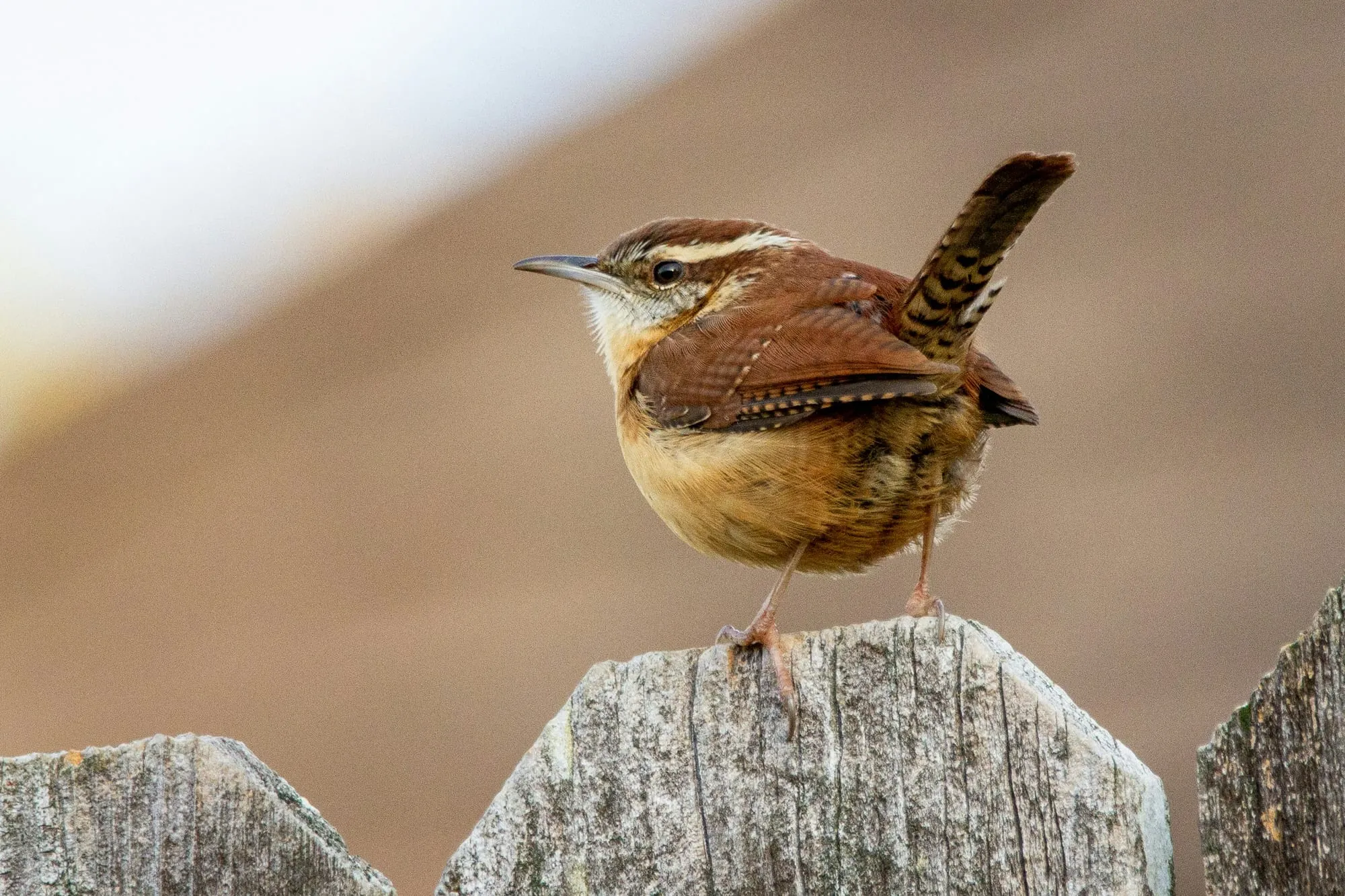
The common backyard birds of the Southeast include a few that northern feeder guides barely mention: the Brown-headed Nuthatch, Brown Thrasher and Pine Warbler, plus warblers at the suet in winter. Below are FeederWatch’s numbers for nine states, the birds that live here all year, the ones that mainly winter here, and what to put out for each.
The Southeast’s top feeder birds, state by state
There’s no single official “Southeast.” For this guide it means nine states: Virginia, North Carolina, South Carolina, Georgia and Florida, plus Alabama, Mississippi, Tennessee and Kentucky. That’s the US Census Bureau’s South Atlantic and East South Central divisions, minus Delaware, Maryland, Washington, D.C., and West Virginia (CDC/NCHS).
Each figure below is FeederWatch’s “Percentage of Sites Visited” for 2025–26, copied as published on the state’s page. We couldn’t open FeederWatch’s Explanation of Terms page, so we use the figure as labeled and don’t restate a formula. A dash means the bird wasn’t in that state’s top 25, not that nobody saw one.
Southeast feeder birds: Percentage of Sites Visited, FeederWatch 2025–26
| Bird | VA(882) | NC(522) | SC(162) | GA(256) | FL(323) | AL(99)small sample | MS(22)small sample | TN(252) | KY(129) |
|---|---|---|---|---|---|---|---|---|---|
| Northern Cardinal | 94.19 | 93.62 | 93.10 | 89.63 | 83.38 | 92.59 | 100.00 | 95.02 | 97.14 |
| Tufted Titmouse | 85.16 | 85.79 | 86.78 | 87.04 | 65.04 | 87.04 | 90.91 | 88.12 | 82.86 |
| House Finch | 89.35 | 83.61 | 82.18 | 88.52 | 46.70 | 90.74 | 81.82 | 90.80 | 92.14 |
| Carolina Wren | 84.09 | 87.07 | 85.06 | 83.70 | 59.03 | 86.11 | 95.45 | 85.82 | 70.00 |
| Chickadee | 90.22* | 80.87 | 86.78 | 90.37 | 48.14 | 87.04 | 100.00 | 76.63 | 86.43* |
| Mourning Dove | 84.84 | 81.79 | 80.46 | 74.81 | 79.08 | 77.78 | 72.73 | 86.21 | 87.86 |
| Downy Woodpecker | 80.86 | 79.42 | 72.41 | 81.48 | 52.72 | 69.44 | 77.27 | 83.14 | 86.43 |
| Red-bellied Woodpecker | 76.67 | 72.68 | 65.52 | 71.85 | 74.21 | 61.11 | 77.27 | 80.84 | 82.14 |
| Blue Jay | 77.20 | 63.75 | 54.02 | 56.67 | 72.78 | 50.93 | 77.27 | 78.93 | 89.29 |
| American Goldfinch | 78.49 | 75.77 | 60.92 | 69.26 | not in top 25 | 73.15 | 77.27 | 76.63 | 80.00 |
| Eastern Bluebird | 64.84 | 72.50 | 67.24 | 74.81 | 35.53 | 77.78 | 54.55 | 73.18 | not in top 25 |
| Northern Mockingbird | 52.69 | 57.38 | 60.92 | 58.89 | 61.32 | 57.41 | 81.82 | 68.97 | 50.00 |
| Dark-eyed Junco | 87.31 | 77.05 | 47.13 | 56.67 | not in top 25 | 61.11 | 72.73 | 79.31 | 88.57 |
| White-throated Sparrow | 74.95 | 63.93 | 56.32 | 50.74 | not in top 25 | 53.70 | 63.64 | 63.22 | 65.71 |
| White-breasted Nuthatch | 73.55 | 63.57 | 42.53 | 68.52 | not in top 25 | 60.19 | not in top 25 | 70.11 | 64.29 |
| American Robin | 69.35 | 64.66 | 54.02 | 61.85 | not in top 25 | 55.56 | 50.00 | 73.95 | 71.43 |
| Chipping Sparrow | 49.03 | 59.56 | 71.26 | 74.44 | not in top 25 | 59.26 | 63.64 | 42.53 | 37.14 |
| Yellow-rumped Warbler | not in top 25 | 54.46 | 62.07 | 55.56 | 46.99 | 57.41 | 59.09 | not in top 25 | not in top 25 |
| Pine Warbler | not in top 25 | 47.54 | 55.17 | 62.96 | 42.12 | 56.48 | not in top 25 | not in top 25 | not in top 25 |
| Brown Thrasher | not in top 25 | 53.19 | 49.43 | 56.67 | 38.11 | 48.15 | 59.09 | not in top 25 | not in top 25 |
| Brown-headed Nuthatch | not in top 25 | 52.82 | 51.72 | 68.15 | not in top 25 | 53.70 | not in top 25 | not in top 25 | not in top 25 |
Header numbers are how many FeederWatchers reported from each state. *Virginia and Kentucky list “Carolina/Black-capped Chickadee” as one entry; the other seven list Carolina Chickadee. †Small samples: Alabama’s list rests on 99 FeederWatchers and Mississippi’s on just 22. With so few reporters, one or two yards can move a figure a lot, so read those two columns as hints, not rankings. Kentucky’s 129 is modest too.
Sources: FeederWatch Top 25, 2025–26, for VA, NC, SC, GA, FL, AL, MS, TN, KY (all read October 30, 2026).
Keep the season in mind: FeederWatch says its coming season runs from November 1 through April 30 (FeederWatch). This is a cool-season picture, so birds that only nest here in summer barely show up.
What the numbers show
Our reading of the 2025–26 lists (patterns in the data, not range maps):
- This is cardinal country. The cardinal was first in Virginia, North Carolina, South Carolina, Florida, Alabama, Tennessee and Kentucky, tied for first with the Carolina Chickadee in Mississippi (both 100.00%, from 22 FeederWatchers), and second in Georgia by less than a point. Even its lowest figure, Florida’s 83.38%, topped that state’s list. Compare our Midwest guide, where chickadees lead in the northern states.
- Three birds above 80% everywhere but Florida. The cardinal, Tufted Titmouse and House Finch topped 80% of sites in all eight non-Florida states. The Carolina Wren topped 83% in seven of them; only Kentucky (70.00%) was lower.
- A pine-woods group farther south. The Brown-headed Nuthatch, Pine Warbler, Yellow-rumped Warbler and Brown Thrasher were all on the North Carolina, South Carolina, Georgia and Alabama lists. None of the four made the Virginia, Tennessee or Kentucky lists.
- Juncos thin out to the south. Dark-eyed Juncos were at 77% to 89% of sites in Virginia, Kentucky, Tennessee and North Carolina, 47% to 61% in South Carolina, Georgia and Alabama, and not on Florida’s list.
- Chipping Sparrows go the other way. They were at 71.26% in South Carolina and 74.44% in Georgia, but 42.53% in Tennessee and 37.14% in Kentucky.
Year-round residents
Audubon describes each of these as a permanent or mostly year-round resident somewhere in the region. Each heading links to the Audubon page we used for field marks and feeding; state figures are from the table above. For seed basics, see types of bird seed.
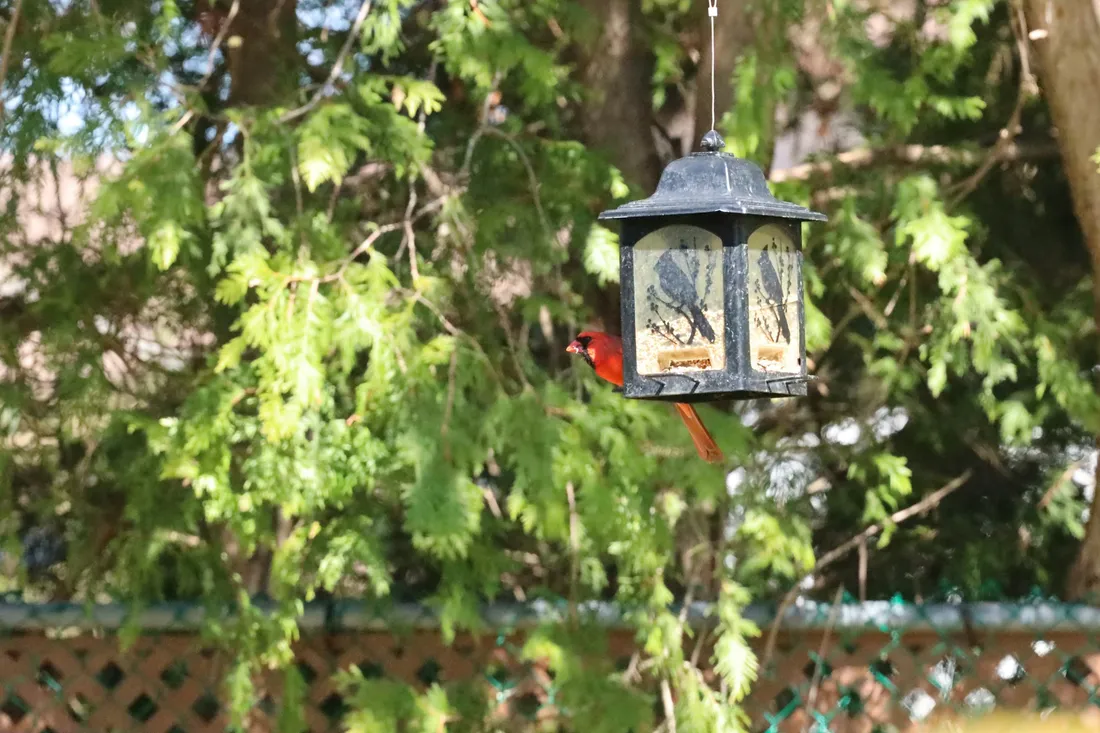
Northern Cardinal (Cardinalis cardinalis)
- Field marks: Audubon calls the male our only red bird with a crest. The female is duller, with the same crest, a big pink bill and a fairly long tail. Young birds start out with a black bill.
- Feeder habits: Audubon says it readily visits feeders, favors sunflower seeds, and forages mostly by hopping on the ground or in low bushes. Safflower suits it too; see how to attract cardinals.
- State figures: Kentucky 97.14%, Tennessee 95.02%, Florida 83.38%.
- Southeast angle: Audubon lists two to three broods a year, rarely four.
Carolina Wren (Thryothorus ludovicianus)
- Field marks: A small wren, chestnut on top and butterscotch underneath, with a bold white stripe over the eye.
- Feeder habits: It eats mostly insects, but Audubon says it sometimes comes to feeders for suet and peanuts, and eats more berries and small fruit in winter.
- State figures: Mississippi 95.45% (small sample), North Carolina 87.07%, Kentucky 70.00%.
- Southeast angle: Audubon says it’s common in open woods and backyards in the Southeast. It nests in odd spots near people, such as garage shelves and building crevices, and raises up to three broods a year in the South.
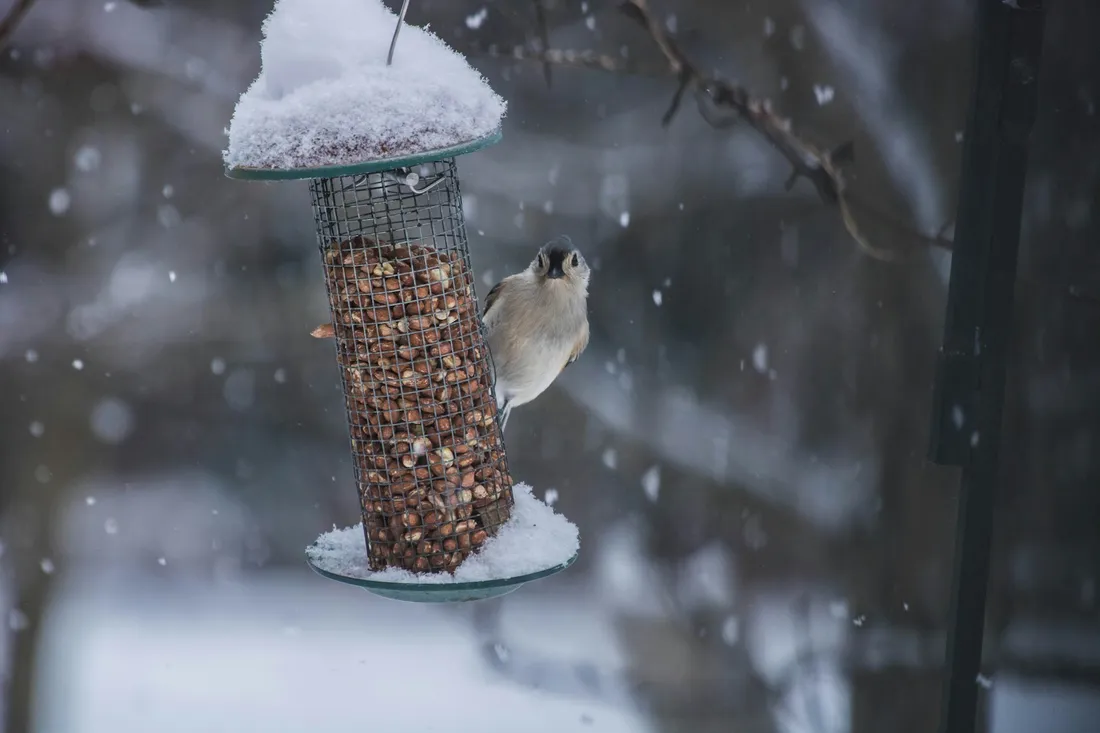
Tufted Titmouse (Baeolophus bicolor)
- Field marks: A gray-and-white bird with a perky crest, a black forehead, a pale face and rusty sides.
- Feeder habits: It comes for seeds or suet and often carries sunflower seeds away one at a time. Audubon says it holds seeds and acorns with its feet and pounds them open.
- State figures: Mississippi 90.91% (small sample), Tennessee 88.12%, Florida 65.04%.
- Southeast angle: Its whistled “peter-peter-peter” may be heard even in midwinter thaws. Audubon says it lines its nest with animal hair, sometimes plucked from a live animal.
Carolina Chickadee (Poecile carolinensis)
- Field marks: A black cap and bib against bright white cheeks, with a soft gray back, wings and tail.
- Feeder habits: Audubon says it comes to feeders for seeds or suet and stores food to eat later, though its page also says it has been reported to be less of a feeder visitor and does come to suburban yards for sunflower seeds.
- State figures: Georgia 90.37% (first on the list), Alabama 87.04%, Florida 48.14%.
- Southeast angle: This is the region’s chickadee. See the chickadee section below for Virginia and Kentucky.
Downy Woodpecker (Dryobates pubescens)
- Field marks: Audubon calls it the smallest woodpecker in North America: a white back, a striped face and a very short, stubby bill. Males have a red spot on the nape.
- Feeder habits: Suet. In winter it often joins mixed flocks of chickadees and nuthatches.
- State figures: Kentucky 86.43%, Tennessee 83.14%, Florida 52.72%.
- Southeast angle: It was on every Southeast list, but well below the cardinal in Florida and Alabama.
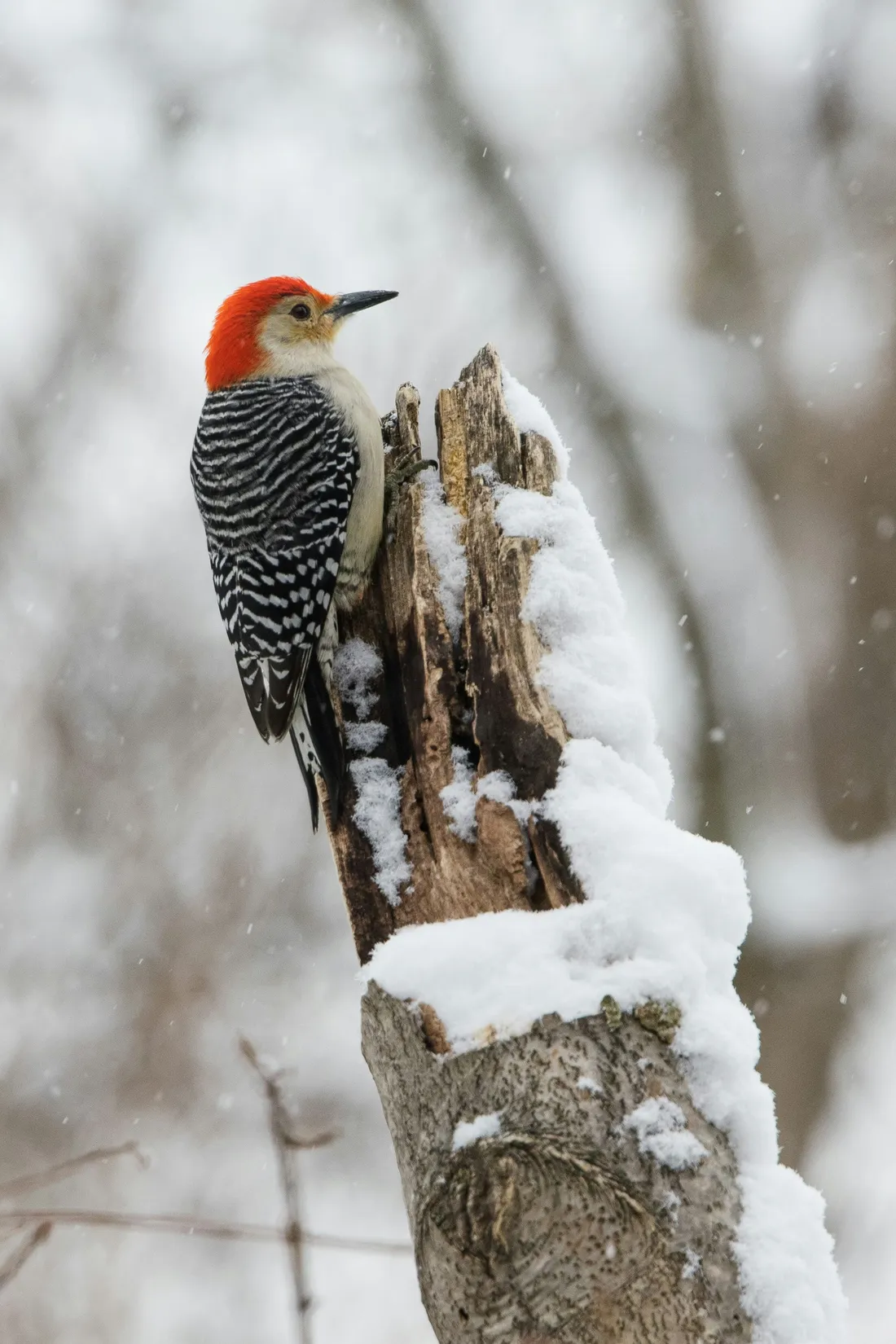
Red-bellied Woodpecker (Melanerpes carolinus)
- Field marks: Narrow black-and-white bars on the back and a buffy face and chest. Males have red on the forehead, crown and nape; females only on the nape. The red on the belly is usually hard to see.
- Feeder habits: It’s known to visit suet feeders. Audubon says more than half its diet can be plant food at some seasons, including acorns, nuts and fruit.
- State figures: Kentucky 82.14%, Florida 74.21% (third on Florida’s list), Alabama 61.11%.
- Southeast angle: It’s most common in deciduous forest, especially along rivers and in swamps. Woodpecker setups are in how to attract woodpeckers.
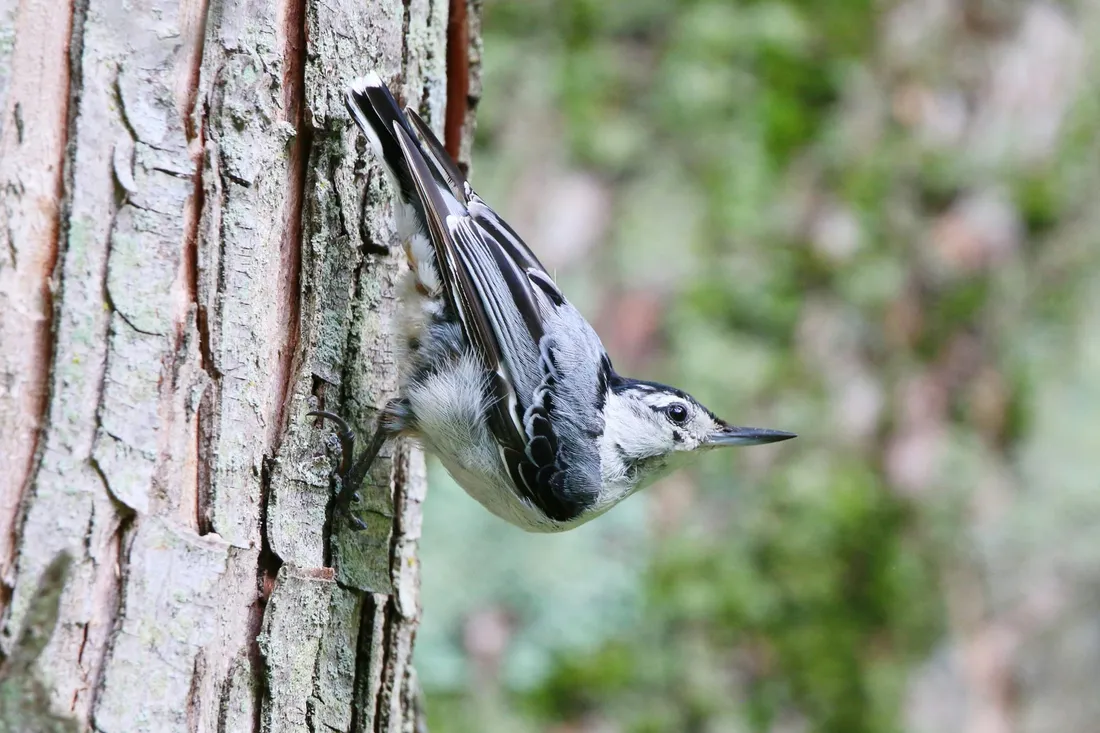
White-breasted Nuthatch (Sitta carolinensis)
- Field marks: A chunky, short-tailed bird with a beady black eye on a white face and a narrow dark crown stripe. It climbs all over trunks and big limbs.
- Feeder habits: Audubon says it’s readily drawn to sunflower seeds and suet and also eats peanut-butter mixes.
- State figures: Virginia 73.55%, Tennessee 70.11%, South Carolina 42.53%; not on the Florida or Mississippi lists.
- Southeast angle: It favors mature deciduous forest. In the pine country farther south, look for its small cousin, the Brown-headed Nuthatch (below).
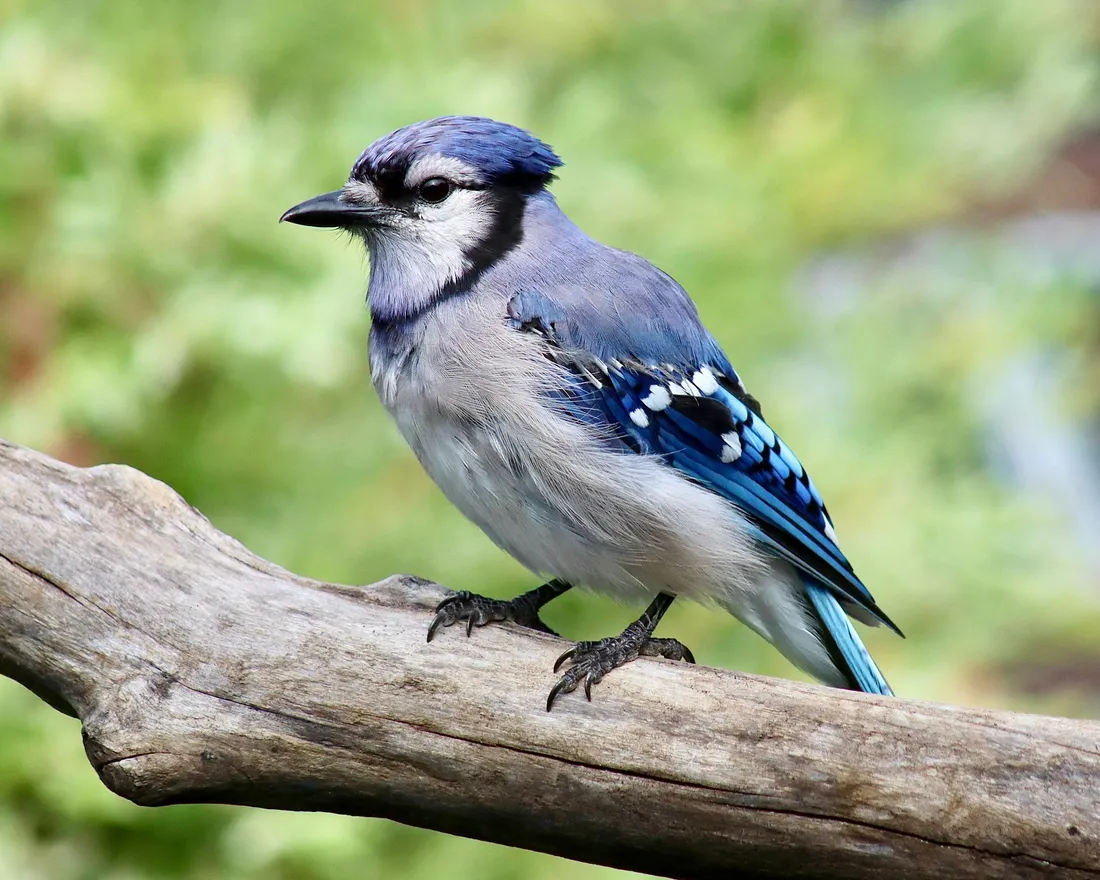
Blue Jay (Cyanocitta cristata)
- Field marks: A big, crested jay, blue-gray on the back and bright blue on the wings and tail, with a black necklace, white wing bars and white tail corners.
- Feeder habits: It comes to feeders for seeds or suet, and stores acorns in holes in the ground.
- State figures: Kentucky 89.29%, Tennessee 78.93%, Alabama 50.93%.
- Southeast angle: Audubon notes it can imitate the scream of a Red-shouldered Hawk. That hawk made Florida’s feeder list itself (29.23%), so a hawk call at your feeder may or may not be a hawk.
Mourning Dove (Zenaida macroura)
- Field marks: Black spots on the wings and a long, pointed tail with white spots along the edge that show in flight.
- Feeder habits: Seeds make up about 99% of its diet, Audubon says, and it often eats on the ground under hanging feeders.
- State figures: Kentucky 87.86%, Tennessee 86.21%, Mississippi 72.73%.
- Southeast angle: One pair may raise five to six broods a year in southern areas, and many northern doves move south in fall.
House Finch (Haemorhous mexicanus)
- Field marks: Males have a red eyebrow and forehead against a brown cap, with red on the throat and chest; some are orange or yellow instead. Females and young birds are brown with rather plain faces.
- Feeder habits: It comes for seeds, sunflower above all, and Audubon says it also visits hummingbird feeders for sugar water.
- State figures: Kentucky 92.14%, Tennessee 90.80%, Florida 46.70%.
- Southeast angle: Audubon says some populations have been hit by conjunctivitis, which swells their eyes shut. If you see it, take feeders down and clean them.
Eastern Bluebird (Sialia sialis)
- Field marks: Males are bright blue above, reddish brown on the throat and chest, with a white belly. Females are paler and duller.
- Feeder habits: Audubon’s page doesn’t mention feeders. It eats many berries, especially in winter. Mealworms are covered in our winter feeding guide.
- State figures: Alabama 77.78%, Georgia 74.81%, Florida 35.53%; not on Kentucky’s list.
- Southeast angle: Audubon calls it a permanent resident in many southern areas, and many nest in birdhouses along “bluebird trails.”
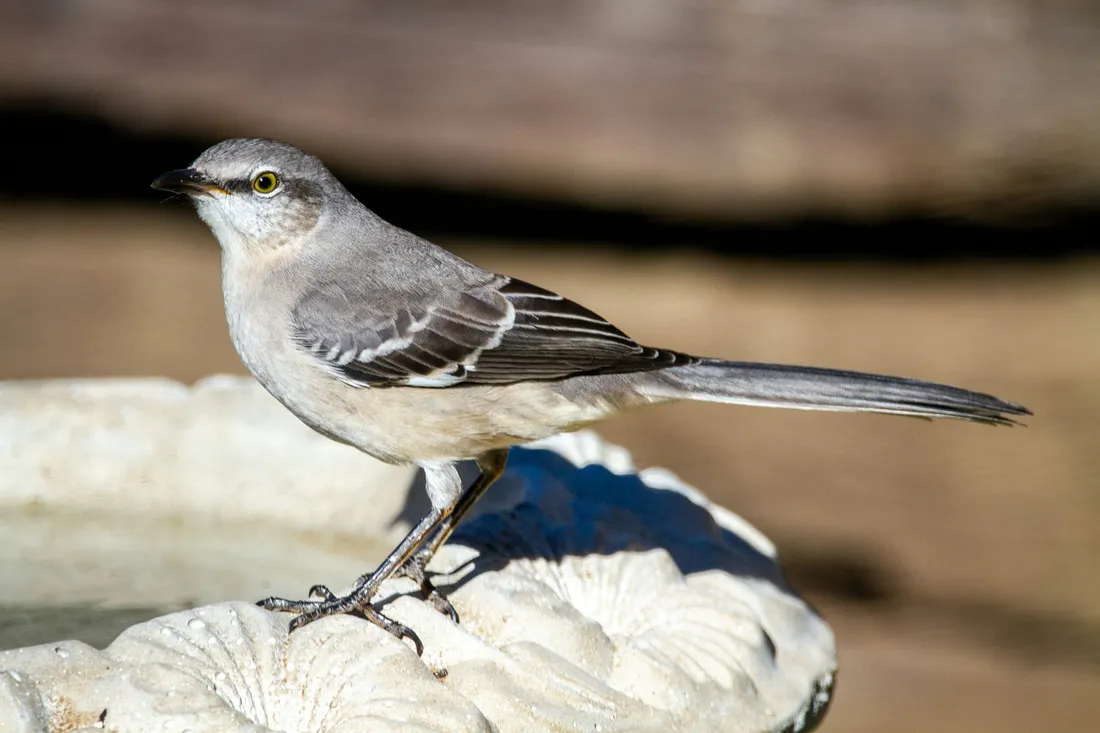
Northern Mockingbird (Mimus polyglottos)
- Field marks: A pale gray, long-tailed bird with white wing patches that show mainly in flight and white outer tail feathers.
- Feeder habits: Audubon’s page doesn’t mention feeders. Its fall and winter diet relies heavily on berries and wild fruit, so our suggestion is fruiting shrubs rather than seed.
- State figures: Mississippi 81.82% (small sample), Tennessee 68.97%, Kentucky 50.00%.
- Southeast angle: It was on all nine lists. It sings long strings of repeated phrases, often copies other birds and regularly sings at night.
Winter visitors: sparrows, juncos and warblers
Northern readers may not expect these. Some stay all year in parts of the region, but most of these birds at a Southeast feeder in January came south for the winter.
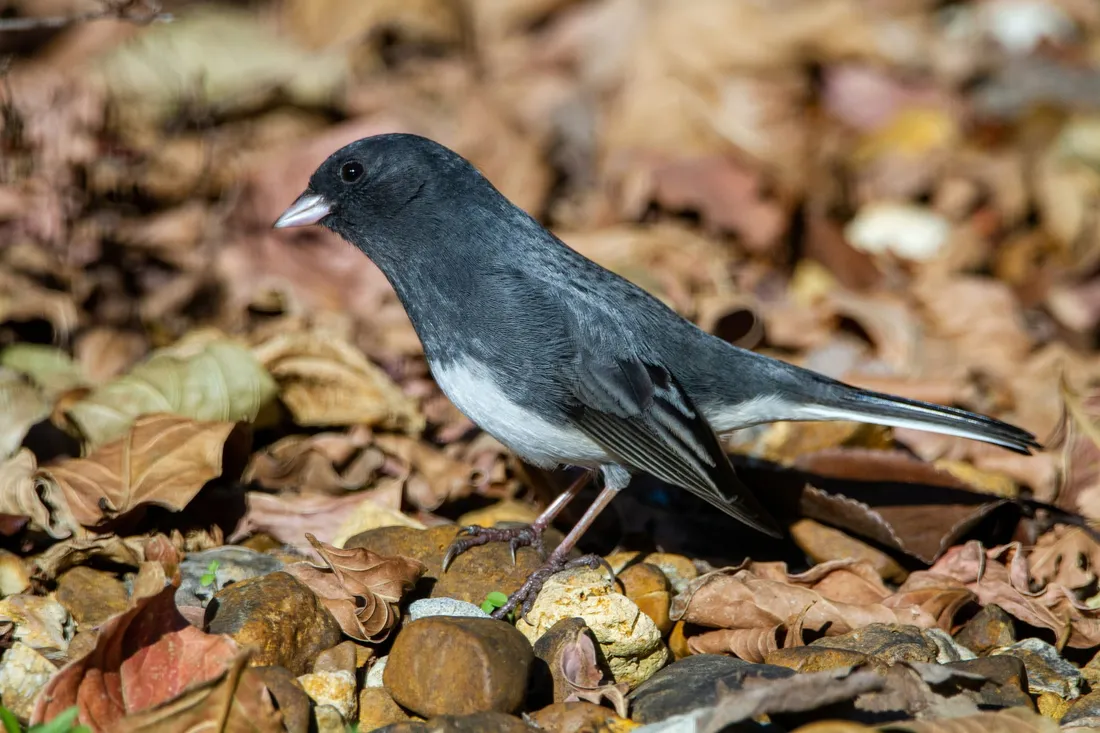
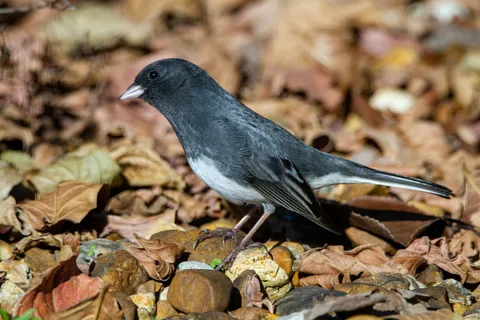
Dark-eyed Junco (Junco hyemalis)
- Field marks: The eastern “Slate-colored” junco is solid gray on the head, back and sides, with white outer tail feathers.
- Feeder habits: Audubon says it tends to forage on the ground under the feeding tray, and eats mainly weed and grass seeds in winter. White millet on the ground suits it.
- State figures: Kentucky 88.57%, Virginia 87.31%, South Carolina 47.13%; not on Florida’s list.
- Southeast angle: Audubon says males tend to winter slightly farther north than females, so the juncos in a Georgia yard may lean female.
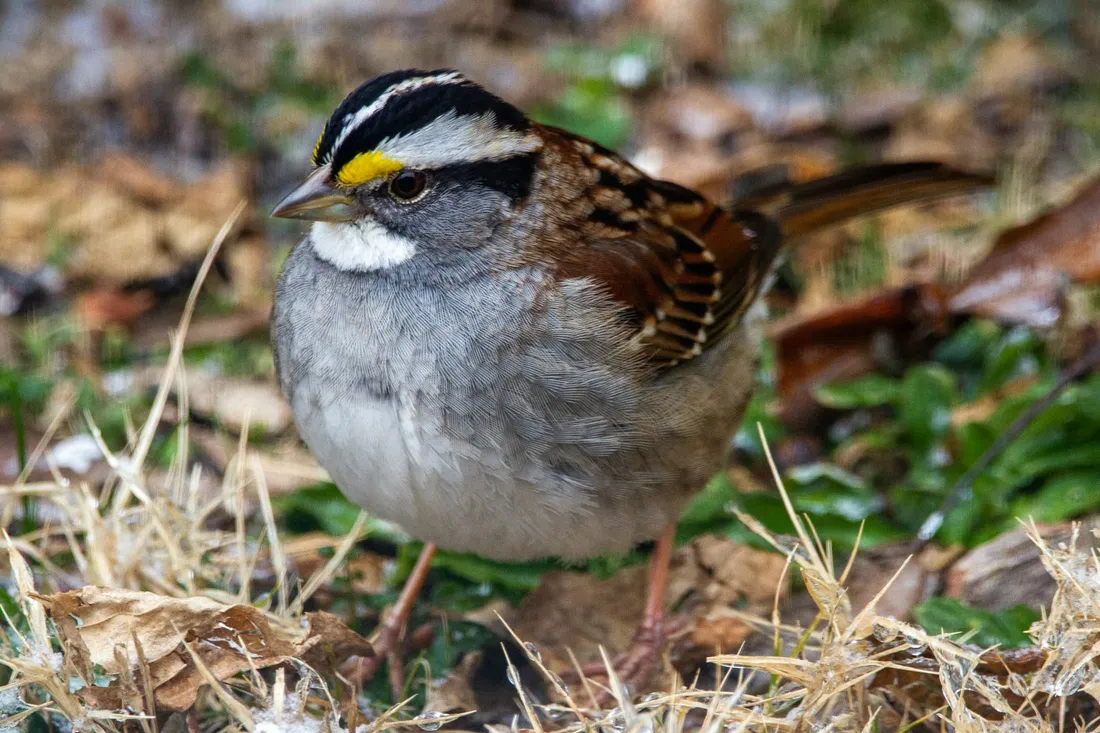
White-throated Sparrow (Zonotrichia albicollis)
- Field marks: A conspicuous white throat, a dark bill, a yellow spot in front of the eye, and head stripes that are either white or tan.
- Feeder habits: It forages mostly on the ground near dense thickets, scratching in leaf litter with both feet, and visits feeders placed near that kind of cover.
- State figures: Virginia 74.95%, Kentucky 65.71%, Georgia 50.74%; not on Florida’s list.
- Southeast angle: Audubon says it migrates mostly at night and fairly late in fall, so don’t expect it at your feeder early in the season.
Chipping Sparrow (Spizella passerina)
- Field marks: In summer, a chestnut cap, a white eyebrow and a black eye line. In winter there’s less contrast and the cap is partly hidden. Dull fall birds have a gray rump.
- Feeder habits: Audubon’s page doesn’t mention feeders. It forages mostly on the ground, in flocks outside nesting season, and eats more seeds in fall and winter.
- State figures: Georgia 74.44%, South Carolina 71.26%, Kentucky 37.14%.
- Southeast angle: It ranked eighth in South Carolina and ninth in Georgia. Our suggestion: scatter a little millet in an open patch near shrubs.
Yellow-rumped Warbler (Setophaga coronata)
- Field marks: A bright yellow rump patch that shows as it flies away, a small yellow patch at the side of the chest and white tail spots. The eastern “Myrtle” form has a white throat. Young females in fall and winter are the dullest.
- Feeder habits: Audubon’s page doesn’t mention feeders. It can digest the wax on berries such as wax myrtle and bayberry, which lets it winter farther north than most warblers.
- State figures: South Carolina 62.07%, Alabama 57.41%, Florida 46.99%; not on the Virginia, Tennessee or Kentucky lists.
- Southeast angle: Our suggestion: plant native wax myrtle if you want it in your yard.
Southern specialties
These three were on the North Carolina, South Carolina, Georgia and Alabama lists in 2025–26, and none made the Virginia, Tennessee or Kentucky lists.
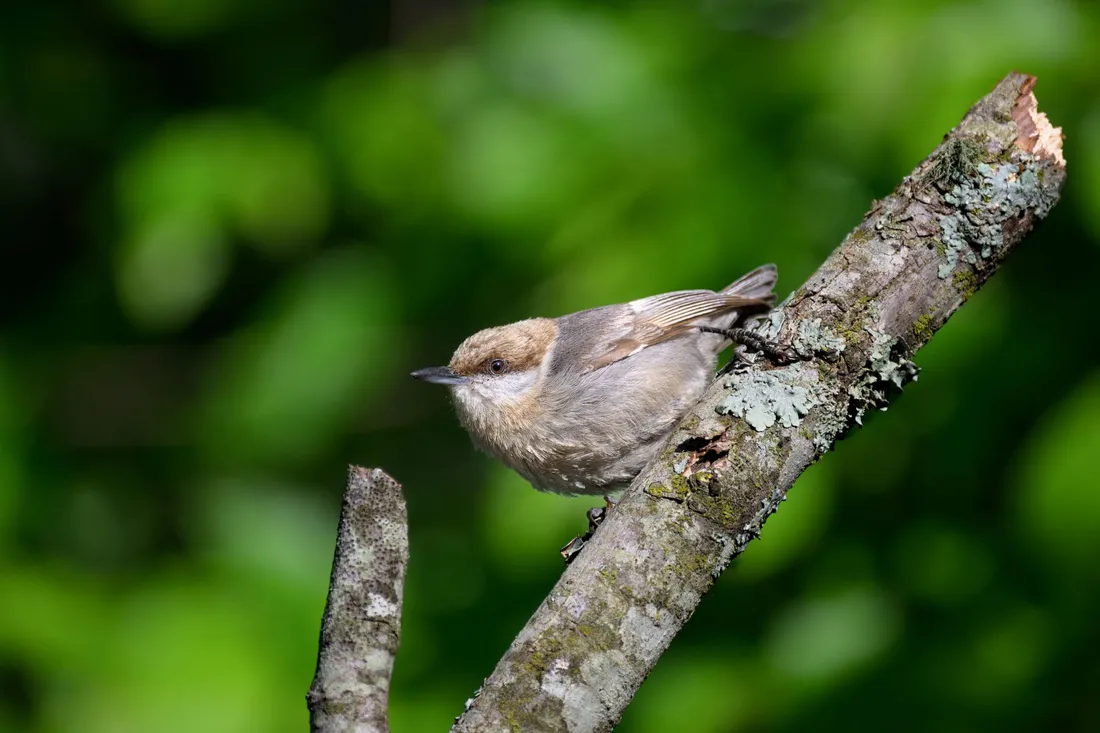
Brown-headed Nuthatch (Sitta pusilla)
- Field marks: A tiny nuthatch, 4.3 to 4.7 inches long, with a brown cap down to the eye, a white nape spot, a gray back and pale underparts.
- Feeder habits: Audubon’s page doesn’t mention feeders. It eats more insects in summer and mainly pine seeds in winter, and may use a chip of bark as a tool to pry off other bark.
- State figures: Georgia 68.15% (13th), Alabama 53.70%, North Carolina 52.82%, South Carolina 51.72%.
- Southeast angle: A mostly permanent resident where pines such as loblolly, longleaf, slash or pond pine grow. Audubon calls it probably the least numerous nuthatch in North America. Its call is a series of high piping notes, unlike other eastern nuthatches.
Brown Thrasher (Toxostoma rufum)
- Field marks: A long-tailed bird about 11.5 inches long, rufous-brown above and striped below, with yellow eyes.
- Feeder habits: It forages on the ground, flipping dead leaves aside with its bill, and eats berries and acorns in fall and winter. Audubon’s page mentions feeders only for the few that stay far north in winter.
- State figures: Mississippi 59.09% (small sample), Georgia 56.67%, Florida 38.11%.
- Southeast angle: Audubon calls it a permanent resident in parts of the South. It winters in dense brush, so a feeding spot near thick shrubs gives you the best chance.
Pine Warbler (Setophaga pinus)
- Field marks: Olive above and yellow on the chest, with two wing bars. Males have blurry chest streaks. Young birds in fall range from yellowish to gray.
- Feeder habits: This is the warbler that comes to feeders. Audubon says that, unlike most warblers, it regularly visits for suet and other soft foods. When insects are scarce it eats pine and weed seeds.
- State figures: Georgia 62.96%, Alabama 56.48%, South Carolina 55.17%, Florida 42.12%.
- Southeast angle: Audubon says almost the whole population winters in the southern United States, and many southern birds may not migrate at all. In the South it may forage in flocks with Eastern Bluebirds.
Florida is different
The Florida box (FeederWatch 2025–26, 323 FeederWatchers):
- The cardinal still leads, but at 83.38%, the lowest figure in the region.
- House Finch (46.70%) and Carolina Chickadee (48.14%) fell below 50% of sites. In the other eight states, House Finches ran from 81.82% to 92.14%.
- No Dark-eyed Junco, American Goldfinch, White-throated Sparrow, White-breasted Nuthatch or American Robin made the top 25.
- Palm Warbler ranked eighth (56.45%). Common Ground Dove (45.27%), Gray Catbird (43.55%) and Yellow-throated Warbler (30.37%) made the list.
- Ruby-throated Hummingbird (36.96%) and Painted Bunting (34.10%) were on Florida’s November-to-April list.
Florida vs Georgia at the feeder
Percentage of Sites Visited, Project FeederWatch 2025–26
Northern Cardinal
- Florida
- 83.38%
- Georgia
- 89.63%
Carolina Chickadee
- Florida
- 48.14%
- Georgia
- 90.37%
House Finch
- Florida
- 46.70%
- Georgia
- 88.52%
Blue Jay
- Florida
- 72.78%
- Georgia
- 56.67%
Northern Mockingbird
- Florida
- 61.32%
- Georgia
- 58.89%
Palm Warbler
- Florida
- 56.45%
- Georgia
- not in top 25
Common Ground Dove
- Florida
- 45.27%
- Georgia
- not in top 25
Dark-eyed Junco
- Florida
- not in top 25
- Georgia
- 56.67%
The sources we read don’t explain these differences, so we won’t guess at causes. A full Florida page is planned. Meanwhile, three Florida birds most feeder guides skip:
- Palm Warbler: usually seen low or on the ground, bobbing its tail, with yellow under the tail and a brown crown in winter. Audubon says many winter in the Southeast, especially Florida, near palm groves but not up in the palms. Its page doesn’t mention feeders.
- Common Ground Dove: a small, short-tailed dove, 5.9 to 7.1 inches, with a scaly head and chest. Its wings flash rusty red in flight. Audubon says it comes to feeders for seeds, especially in the Southeast, and has declined seriously in many areas there.
- Gray Catbird: smooth gray with a black cap and chestnut under the tail, named for its catlike mew. It does much of its feeding on the ground and eats berries. Audubon says most winter in the southern US or the tropics.
About those hummingbirds and buntings: Audubon says the Ruby-throated Hummingbird winters from Mexico to Costa Rica or Panama. FeederWatch’s season includes November and April, which are migration months, and the state list doesn’t show which weeks a bird was seen. So don’t read the Florida figure as proof that hummingbirds winter there. The Painted Bunting is different: Audubon says Atlantic Coast breeders winter in Florida and the northwestern Caribbean, and some Floridians see it at their feeders in winter. Audubon lists it as near threatened.
Carolina or Black-capped?
Across most of the Southeast, your chickadee is a Carolina. Audubon says it replaces the Black-capped Chickadee in the southeastern states, and where the two overlap in the Appalachians, the Carolina lives at lower elevations.
FeederWatch lists the Carolina Chickadee for seven of our nine states. Virginia and Kentucky use one combined entry, “Carolina/Black-capped Chickadee,” so a mountain feeder in those states could have either.
Audubon says the Carolina is best identified by its more southern range. It’s a little smaller, with a cleaner, more restricted bib and less white edging on the wing feathers. Its song has four whistled notes, against two or three for the Black-capped. Where they meet, the two often interbreed and can learn each other’s songs, so voice isn’t proof. Our Northeast guide has the research on how the line between them is moving north.
What to put out for Southeast birds
| Food | Southeast birds it brings in | How to offer it |
|---|---|---|
| Black-oil sunflower | Cardinals, titmice, chickadees, House Finches, nuthatches, Blue Jays | Tube, hopper or tray |
| Safflower | Cardinals above all; retailers also list chickadees, Mourning Doves and House Finches. Many gray squirrels dislike it | Hopper or tray |
| Suet | Downy and Red-bellied Woodpeckers, Carolina Wren, nuthatches, Pine Warbler | Suet cage; shade it in warm spells |
| White proso millet | Juncos, White-throated and Chipping Sparrows, Mourning Doves, ground doves | A little on the ground or a low tray near shrubs |
| Fruiting native shrubs | Mockingbird, thrasher, catbird, bluebird, Yellow-rumped Warbler | Plant them; Audubon’s pages for these birds don’t mention seed feeders |
Sources: the Audubon species pages above, and our types of bird seed and safflower guides. “Shade it in warm spells” and the millet placement are our suggestions. For the cold-season menu, see what to feed birds in winter; for woodpeckers, best suet feeders for woodpeckers; for placement, where to put a bird feeder.
Starter setup (checked October 30, 2026 unless noted)
- Seed: Duncraft Black Oil Sunflower, 5 lb (opens in a new tab), $18.95, available to order (Duncraft)
- For cardinals: Duncraft Safflower, 5 lb (opens in a new tab), $24.95, available to order (Duncraft)
- Suet: Birds Choice Single-Cake Tail Prop Suet Feeder (opens in a new tab), $31.99 on Birds Choice’s store, listed in stock (Birds Choice)
If your feeders stay quiet, our guide to why birds aren’t coming to your feeder walks through the usual causes.
Water in a southern winter
Our suggestion: a clean, topped-up bath can bring in birds that skip seed feeders, such as bluebirds and mockingbirds. In a mild spell a plain bath may be enough. If yours ices over on cold mornings, see best heated bird baths or the no-heater options in how to keep a bird bath from freezing.
Summer-only birds
These breed in the Southeast and mostly leave for the winter, so FeederWatch’s cool-season lists mostly miss them (the Florida exceptions are covered above). Check range maps for your county on All About Birds.
- Ruby-throated Hummingbird: males have a ruby throat that looks black in most light, a green back and a forked black tail. Females have a grayish white throat. Audubon says to avoid red food coloring in nectar feeders, clean them often, and hang them out of reach of cats and away from windows.
- Summer Tanager: the male is rosy red all year; the female is rich yellow, and both have a large pale bill. Audubon says it breeds in the Southeast’s dry open oak, hickory and pine woods, breaks into wasp nests for the larvae, and winters from central Mexico to Bolivia and Brazil. Its page doesn’t mention feeders.
- Painted Bunting: the male has a blue head, green back and red throat, chest and rump; the female is green above and yellow-green below. Audubon says adult males are often trapped as cage birds on their tropical wintering grounds.
Watching them
Telling a Pine Warbler from a dull winter goldfinch across the yard takes magnification. Our beginner binoculars guide explains what to look for. One example from that guide is the Celestron Nature DX 8x42 (opens in a new tab), $179.95 list on celestron.com when we last checked it (October 11, 2026); check the current price and stock (Celestron). If you’re out during the day, a camera bird feeder records who came while you were gone.
Count your birds: Project FeederWatch
FeederWatch says its next season begins November 1 and runs through April 30 (FeederWatch). Volunteers count the birds at their feeders and send in the tallies, which become the state lists on this page. The Southeast’s thinnest lists come from Mississippi (22 FeederWatchers in 2025–26) and Alabama (99), so a count from those states carries real weight. Join here.
Sources
- Project FeederWatch (Cornell Lab of Ornithology and Birds Canada), Top 25, 2025–26: VA, NC, SC, GA, FL, AL, MS, TN, KY; Join or renew
- National Audubon Society field guide: species pages linked in each heading and bullet above
- CDC National Center for Health Statistics, Geographic region (US Census Bureau regions and divisions)
- Products: Duncraft black-oil sunflower, Duncraft safflower, Birds Choice single-cake tail prop suet feeder, Celestron Nature DX 8x42
Frequently asked questions
- What is the most common backyard bird in the Southeast?
- The Northern Cardinal. In Project FeederWatch's 2025–26 counts it ranked first in seven of the nine Southeast states we cover, tied for first with the Carolina Chickadee in small-sample Mississippi, and came second in Georgia, just behind the Carolina Chickadee (90.37% vs 89.63% of sites).
- What birds come to Southeast feeders in winter?
- The year-round regulars (cardinals, titmice, Carolina Wrens, Carolina Chickadees, House Finches and woodpeckers) plus winter arrivals. In FeederWatch's 2025–26 counts, White-throated Sparrows and Dark-eyed Juncos were on the top-25 list in every state we cover except Florida, and Yellow-rumped Warblers in six of the nine.
- Which chickadee lives in the Southeast?
- Mostly the Carolina Chickadee. Audubon says it replaces the Black-capped Chickadee in the southeastern states. FeederWatch lists Carolina Chickadee for North Carolina, South Carolina, Georgia, Florida, Alabama, Mississippi and Tennessee, and a combined Carolina/Black-capped entry for Virginia and Kentucky.
- Do warblers come to bird feeders?
- The Pine Warbler does. Audubon says that, unlike most warblers, it regularly comes to feeders for suet and other soft foods. The Yellow-rumped Warbler was also on six Southeast lists in 2025–26, but its Audubon page talks about berries such as wax myrtle and bayberry, not feeders.
- Why are Florida's feeder birds different?
- The data show it, even if they don't explain it. In FeederWatch's 2025–26 Florida list, House Finches (46.70%) and Carolina Chickadees (48.14%) were below 50% of sites, Palm Warblers ranked eighth, and Common Ground Doves, Gray Catbirds, Ruby-throated Hummingbirds and Painted Buntings made the top 25. Juncos, goldfinches and White-throated Sparrows did not.
- What should I feed birds in the Southeast?
- Black-oil sunflower for most feeder birds, safflower if cardinals are your favorite or squirrels are a problem, suet for woodpeckers, wrens and Pine Warblers, and a little white millet on the ground near shrubs for sparrows, juncos and doves. Fruiting native shrubs feed the mockingbirds, thrashers and bluebirds that seed feeders miss.
Keep reading

Written by
Research and editing
The Feeder Field editorial team researches backyard birding gear and bird feeding for US readers. We compare manufacturer specifications, subscription terms and long-term owner feedback, and we check feeding and bird-behavior advice against the Cornell Lab of Ornithology, Audubon and university extension services. Articles are drafted with the help of AI tools, then fact-checked and edited by our team before they go live. Every guide says whether it is researched or hands-on tested, and we update buying guides at least every six months.